

Pilates has a reputation as a "gentle" method. And in the vast majority of cases, it is: progressive strengthening, control, mobility, posture. But "gentle" doesn't mean "risk-free".
The negative effects of Pilates occur mainly when you skip steps, force your range of motion, or practice with compensations (neck, lower back, shoulders). The goal here is not to scare you: it's to give you a premium, clear, and actionable framework to practice safely and continue progressing without injury.
Key takeaway: Pilates is rarely "bad". The problem is incorrect dosing (level, frequency, technique) and sometimes a medical condition that requires adaptation or professional advice.
1) The main negative effects of Pilates
1.1 Cervical tension (neck, trapezius, headaches)
This is one of the most frequent complaints: "my neck hurts after Pilates". The cause isn't Pilates itself, but a classic pattern: you're initiating the movement with your neck instead of stabilizing with your core (deep abs + shoulder girdle). Repeated neck flexions and certain poorly executed exercises can promote these tensions.
Quick fix (in 15 seconds)
- Lengthen your neck (as if being gently pulled from the back of your head)
- Chin slightly tucked
- Shoulders away from ears
- Reduced range of motion until your core "holds"
1.2 Lower back pain (often linked to compensations)
Your lower back can flare up if you compensate: hyperextension, unstable pelvis, ribs flaring open, lack of breath control. Lower back pain is typically a signal: you've lost your alignment (or you're moving too fast).
1.3 Muscle overuse and unusual fatigue
Pilates heavily recruits deep stabilizers. If you do too much too soon (especially at the beginning) without recovery, you may feel "different" fatigue: heaviness, stiffness, lack of fluidity, diffuse pain. This is a real possible negative effect when frequency isn't adjusted properly.
2) The drawbacks of Pilates (beyond pain)
2.1 Cardio limitations: not the best choice if your #1 goal = endurance
Pilates isn't designed as pure cardio training. If you're looking for serious endurance work, you may be disappointed by "classical" Pilates, even if it can be demanding muscularly.
2.2 "Low impact" doesn't mean "no cardiovascular stress" for everyone
Important point (and often misunderstood): even though Pilates is generally low-impact, it can stress your cardiovascular system in certain cases (prolonged isometric effort, breathing patterns, etc.). If you have a cardiac condition or any concerns, get clearance from a healthcare professional.
3) Comparison table: "normal" sensations vs warning signs
| After a session | It's OK if… | It's a warning sign if… |
|---|---|---|
| Muscle soreness | localized, "worked muscle" type, disappears within 48–72h | sharp pain, joint pain, radiating pain, persists > 72h |
| Neck | mild fatigue if you're starting out, improves with corrections | headaches, strong stiffness, pain recurring at each session |
| Lower back | mild tension if you're relearning alignment | sharp pain, pinching, pain worsened by flexion/rotation |
| Breathlessness | you can speak during effort (moderate intensity) | chest pain, dizziness, abnormal breathlessness → stop & get medical advice |
4) Who should be careful? (Contraindications and at-risk profiles)
Certain conditions require adaptation or medical clearance.
4.1 Cardiovascular issues
People with cardiovascular disorders should consult before starting: Pilates may not be "neutral" depending on intensity and breathing technique.
4.2 Bone and joint issues
Arthritis, osteoporosis, joint pain: it's not necessarily a "no", but it's personalized (range of motion, rotations, load, tempo).
5) Can I do Pilates while pregnant?
Yes, often, and it can even be very beneficial if adapted properly. But the golden rule: doctor/midwife clearance + specialized sessions.
The key points that always come up:
- take classes designed for pregnancy (prenatal Pilates)
- avoid certain movements (abdominal pressure, excessive twisting, positions unsuitable for your trimester)
- listen to your body (pain, dizziness, breathlessness, contractions, etc.)
For more comprehensive "public health recommendations", you can refer to general physical activity guidelines during pregnancy and lists of relative/absolute contraindications.
6) Does Pilates slim your figure?
Yes, but not through any "fat-burning magic". Pilates slims mainly because it:
- improves posture (more "open" silhouette)
- tones and strengthens deeply
- improves core control (functional core engagement)
If your goal is rapid fat loss, you'll often get better results by combining it with other activities (walking, cardio, strength training, proper nutrition). Pilates has limitations in this area.
7) Is Pilates good for your cervicals (neck)?
- Yes, if it helps you strengthen overall posture (core + upper back)
- No, if you compensate and overuse your neck muscles (a frequent cause of tension)
8) The 6 mistakes that create (almost) all the "negative effects"
- Level too advanced too early
- Forced range of motion ("reaching far" instead of controlling)
- Poorly coordinated breathing (or breath-holding)
- Tempo too fast (loss of alignment)
- Frequency too high at the start (overuse)
- Self-practice without fundamentals (you repeat your compensations)
These mistakes are classic factors in reported pain and tension.
9) Usage tips: your "anti-pain" protocol
Quality check in 30 seconds (before continuing a set)
You should be able to:
- breathe without holding
- move slowly
- keep shoulders low / neck long
- control the return (no "dropping")
If you can't check all 4 boxes → simplify (less range, fewer reps, easier variation).
The premium progression rule
Quality → control → range of motion → intensity. Not the reverse.
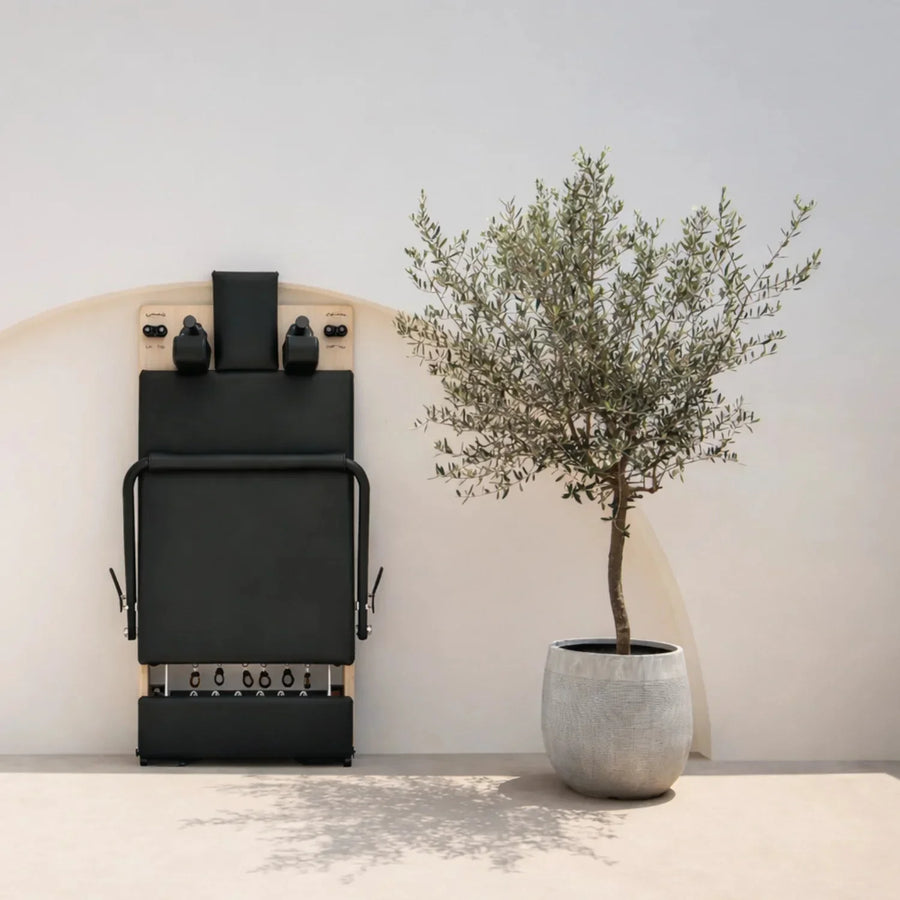
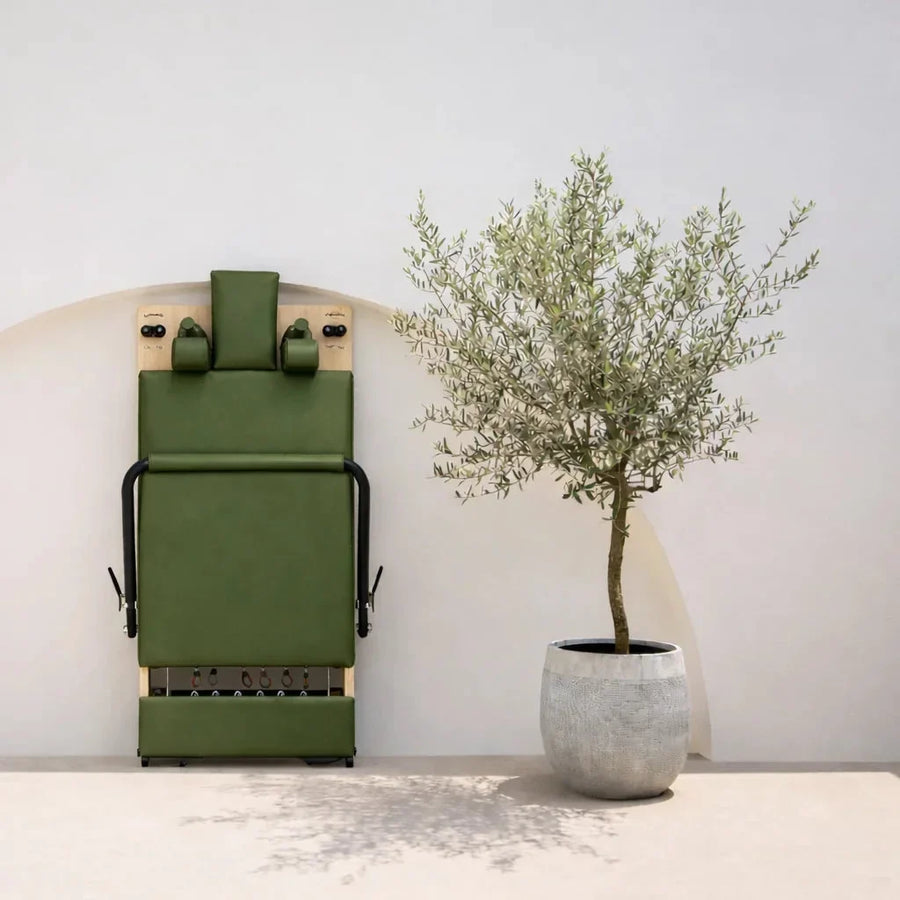
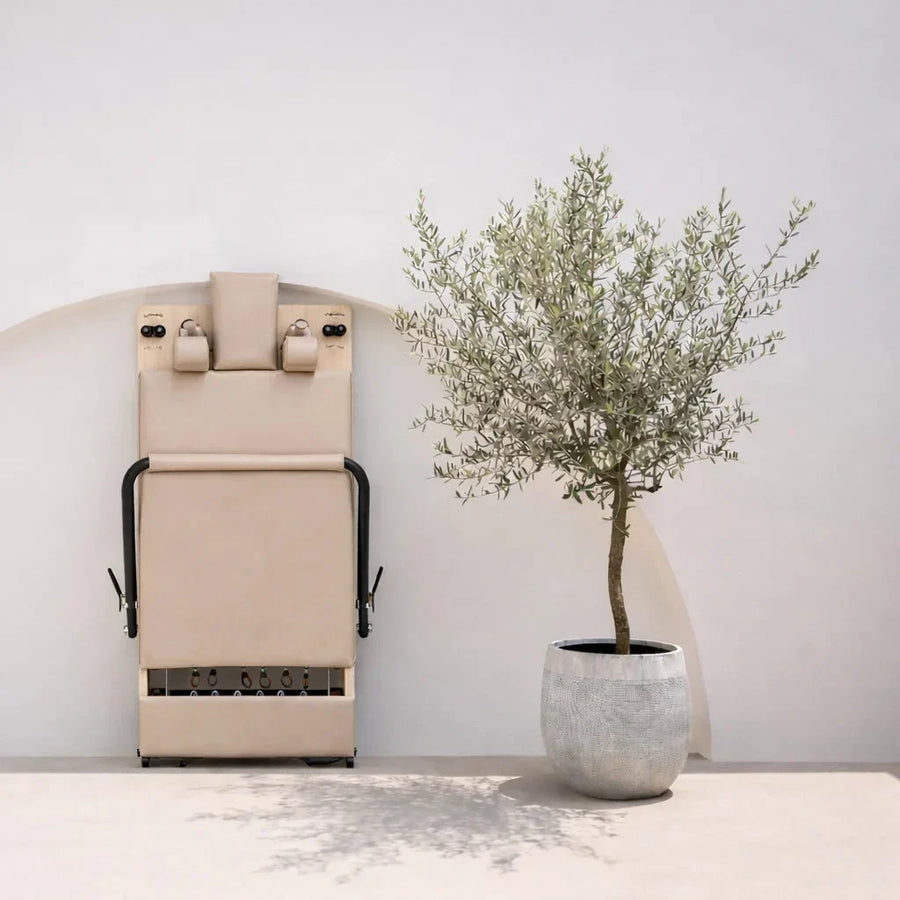
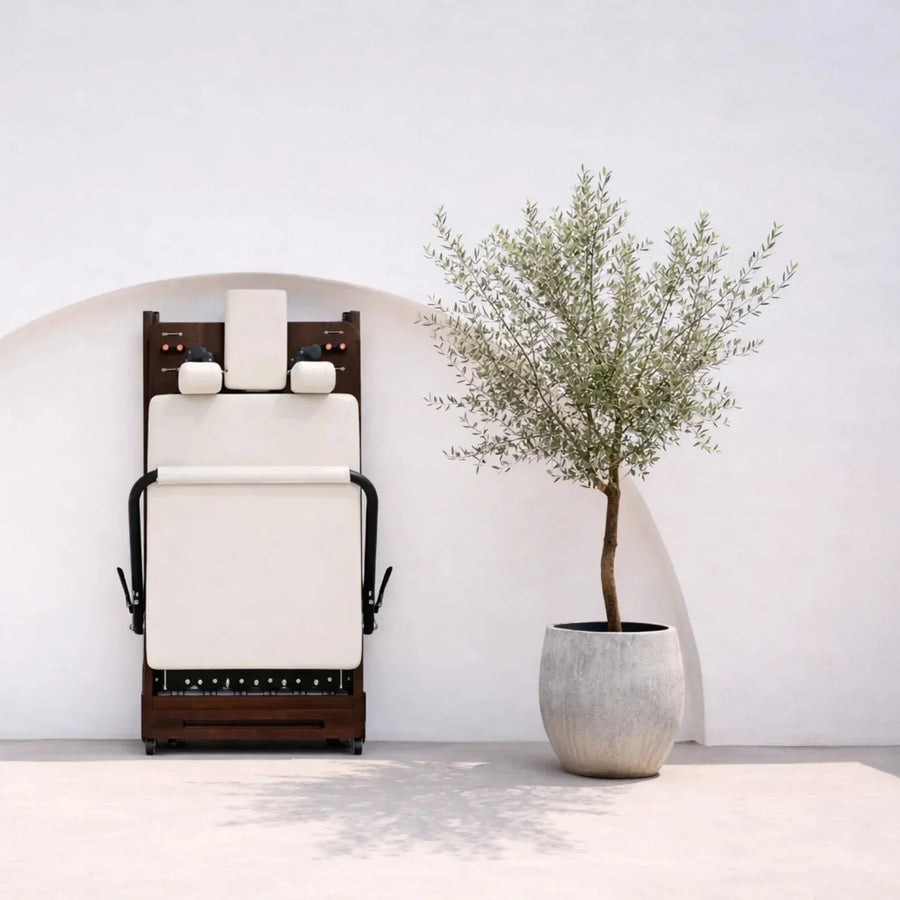
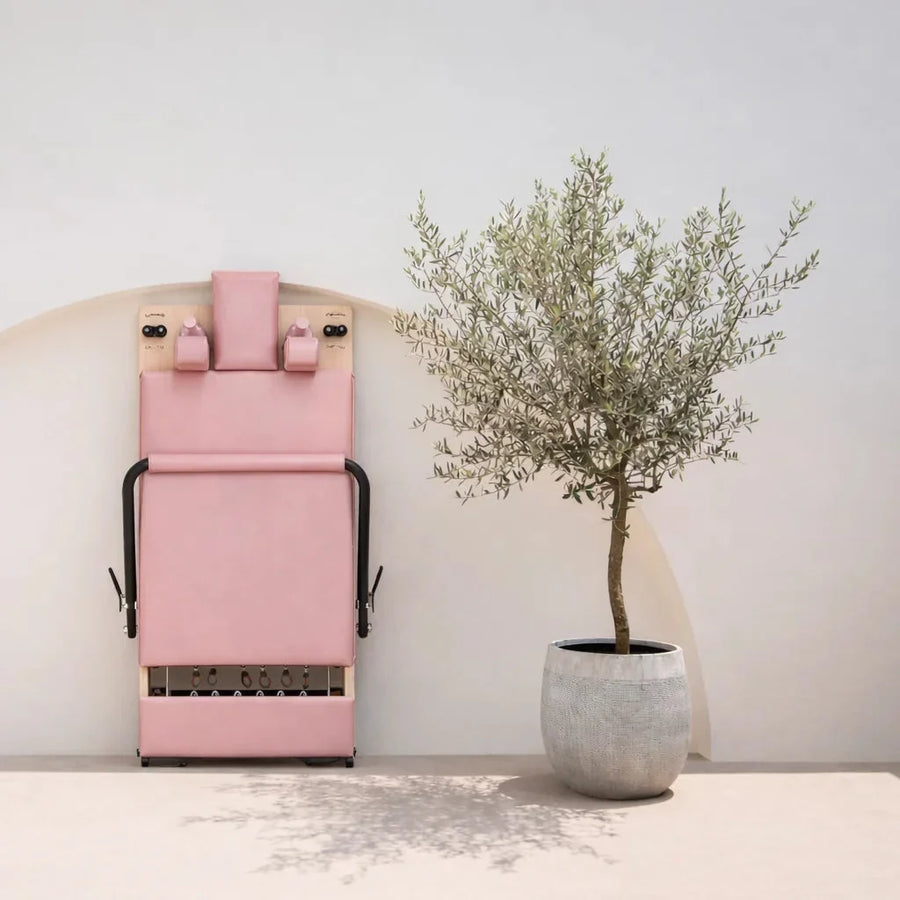
Foldable Reformer (home use)
Ideal if you want to practice "like in a studio" at home, with a machine designed to fit your space and store more easily. Explore the range: https://pilatesathome.fr/collections/reformer-pliable
Foldable Reformer (best space/practice balance)
Recommended if you want regular practice but your living room can't become a permanent studio. Collection: https://pilatesathome.fr/collections/reformer-pliable
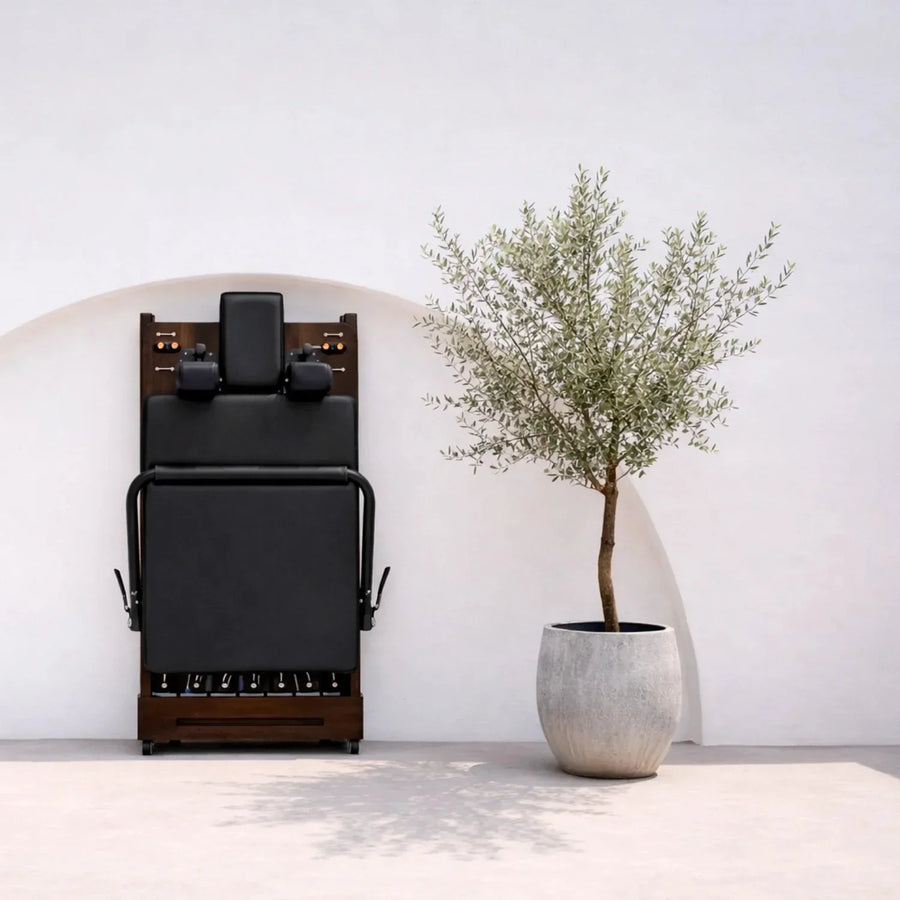
Fixed Reformer / pro setup (intensive use)
For intensive use (daily practice, studio rotation), the fixed model is generally preferred. Need a pro quote: https://pilatesathome.fr/pages/demande-de-devis
Final recommendation (based on your profile)
If your goal is to progress safely and avoid compensation patterns (neck/lower back), a stable and smooth machine makes a real difference in movement quality. Explore: https://pilatesathome.fr/collections/reformer-pliable
10) FAQ
What are the drawbacks of Pilates?
The main drawbacks: neck/lower back tension if technique is poor, overuse if frequency is too high, and cardio limitations if your goal is endurance.
Can I do Pilates while pregnant?
Often yes, but with medical/midwife clearance and ideally in prenatal classes, avoiding certain movements depending on your trimester and situation.
Does Pilates slim your figure?
Yes through posture + tone + core engagement, but for rapid fat loss, you usually need to add walking/cardio/nutrition.
Is Pilates good for your cervicals (neck)?
Yes if you strengthen your core + posture and avoid compensations; otherwise, neck tension can develop (a common mistake).
```
