

In brief: Pilates Reformer effectively relieves lower back pain by strengthening deep trunk muscles (transverse abdominis, multifidus) that support the spine. A 2021 study shows a 58% reduction in pain after 8 weeks at 3 sessions per week. It does not replace medical supervision in case of diagnosed pathology.
You suffer from lower back pain and have been advised to try Pilates Reformer — but you're unsure if it's truly right for your situation, or how to start without making the pain worse. It's a legitimate concern: if used incorrectly, any sport can indeed worsen lower back pain.
In this article, you'll find what research says about Reformer effectiveness for the back, which exercises to prioritize based on your situation, which ones to avoid, and how to structure your practice for lasting relief.
Why is Pilates Reformer particularly effective for the back?
The majority of chronic lower back pain (approximately 85% according to the French Health Authority) is classified as "non-specific": it doesn't result from an identifiable injury but rather from muscle imbalance, prolonged poor posture, or weakness in the spine's stabilizing muscles.
This is precisely where the Reformer comes in. Unlike traditional weight training that works superficial muscles (latissimus dorsi, erector spinae), the Reformer prioritizes deep muscles:
- The transverse abdominis — the spine's natural corset, often inactive in people with lower back pain.
- The multifidus — small intervertebral muscles that ensure fine stability of each vertebra.
- The pelvic floor — the foundation of the deep abdominal corset, directly linked to lower back stabilization.
- The quadratus lumborum — lateral lower back muscle, frequently overloaded in sedentary individuals.
By activating these deep muscles in varied and controlled positions, the Reformer gradually rebuilds the spine's natural support system.
What research says about Pilates Reformer and lower back pain
The scientific evidence is solid. Here are the results of the most relevant studies:
| Study | Population | Protocol | Main result |
|---|---|---|---|
| Journal of Orthopaedic & Sports Physical Therapy, 2021 | 86 adults, chronic lower back pain | 8 weeks, 3×/week, Reformer | -58% pain (VAS scale), +42% lower back stability |
| European Spine Journal, 2020 | 54 women, lower back pain + sedentary lifestyle | 6 weeks, Pilates Reformer vs passive stretching | Reformer group: -45% pain vs -12% for stretching |
| Physical Therapy in Sport, 2023 | 40 athletes, recurrent lower back pain | 12 weeks, Reformer as complement to main sport | -67% recurrence over 6 months of follow-up |
These results are consistent with what customers report at pilatesathome.fr: Sophie M. (43 years old, lower back pain for 4 years) testifies to an almost complete disappearance of her morning pain after 6 weeks of regular home practice.
Practice Reformer at home to care for your back
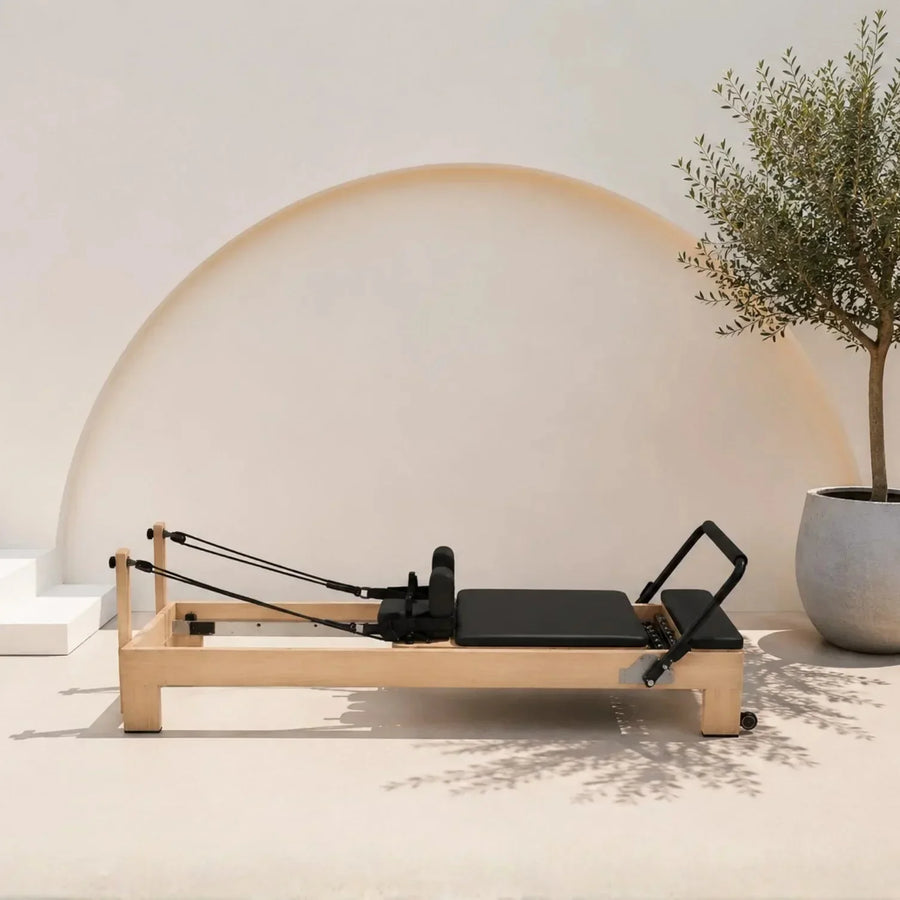
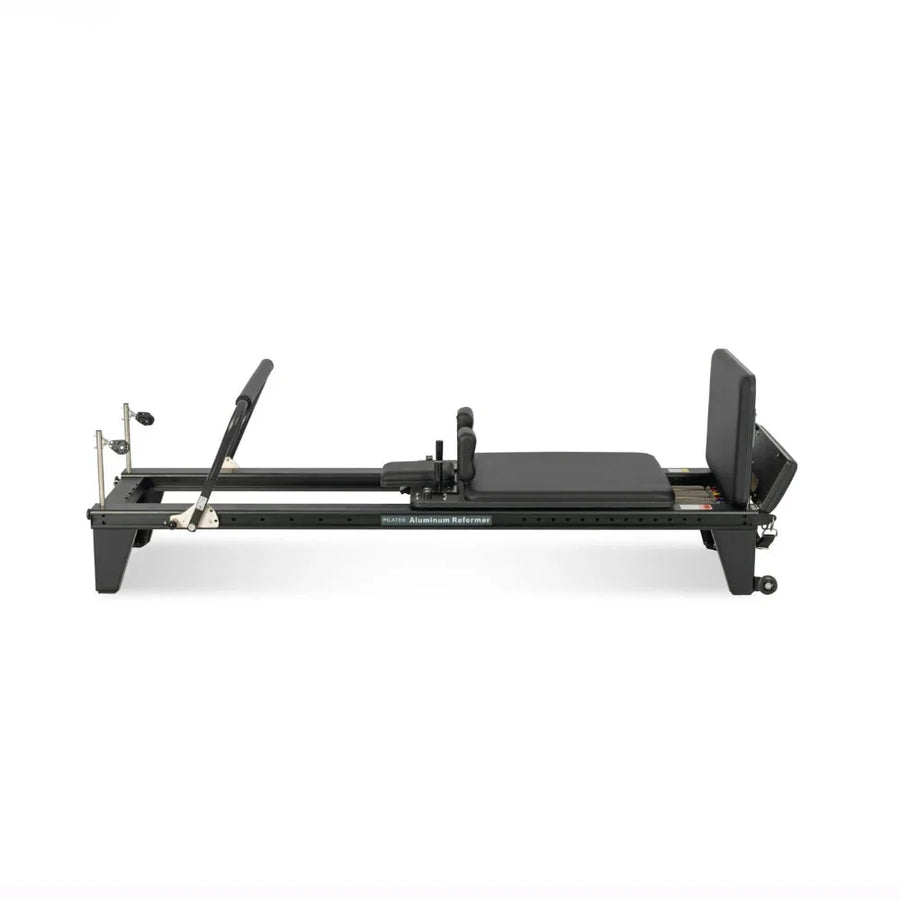
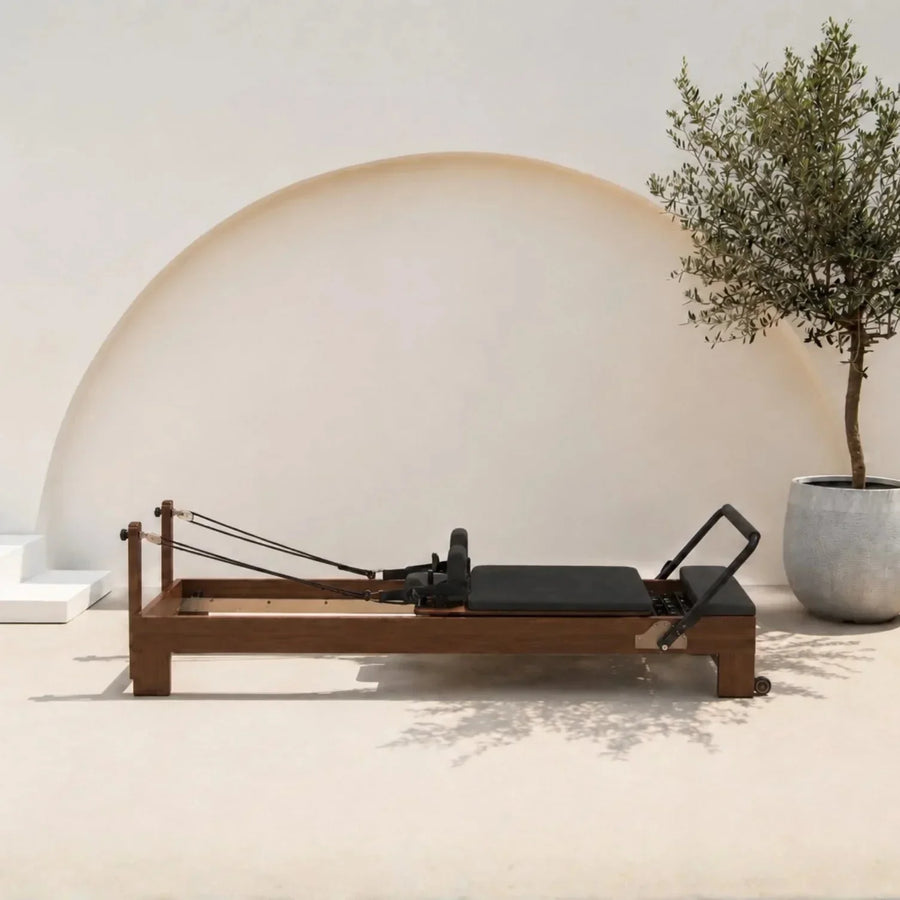
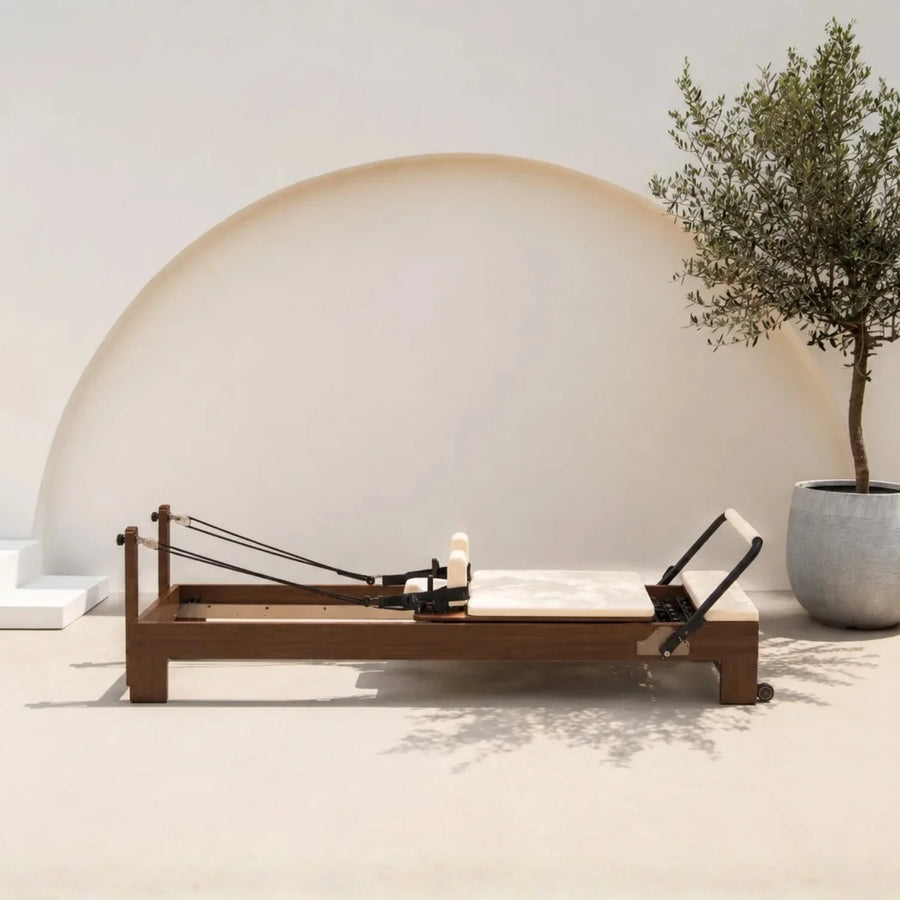
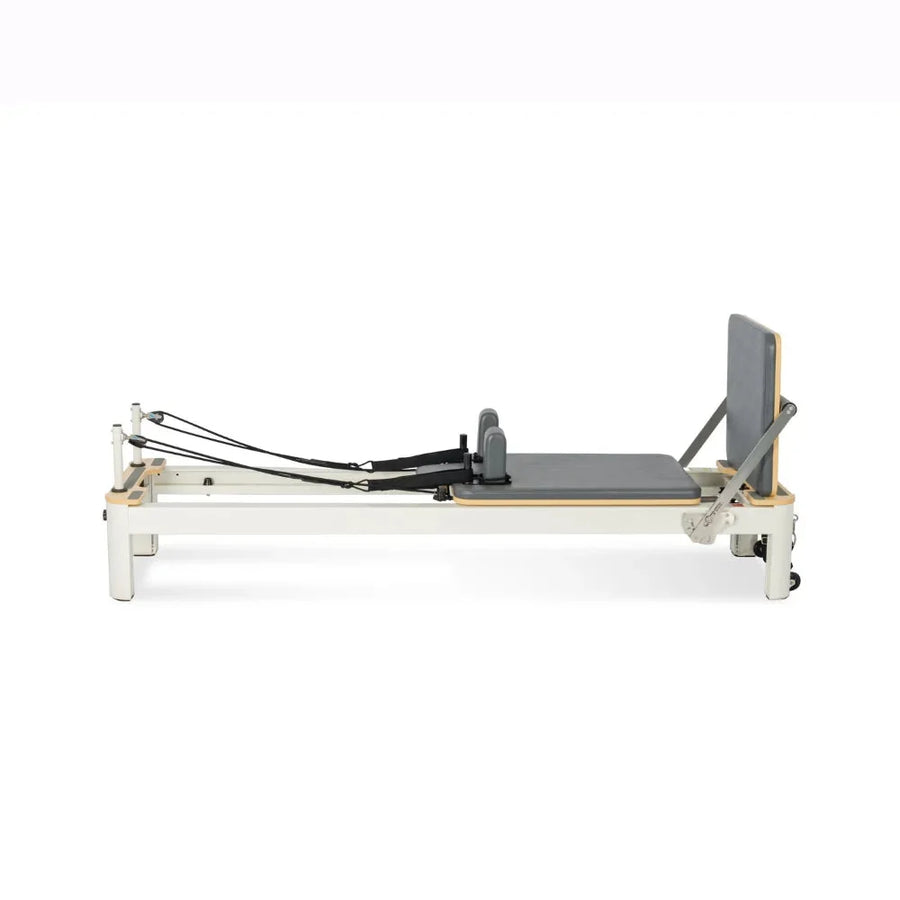
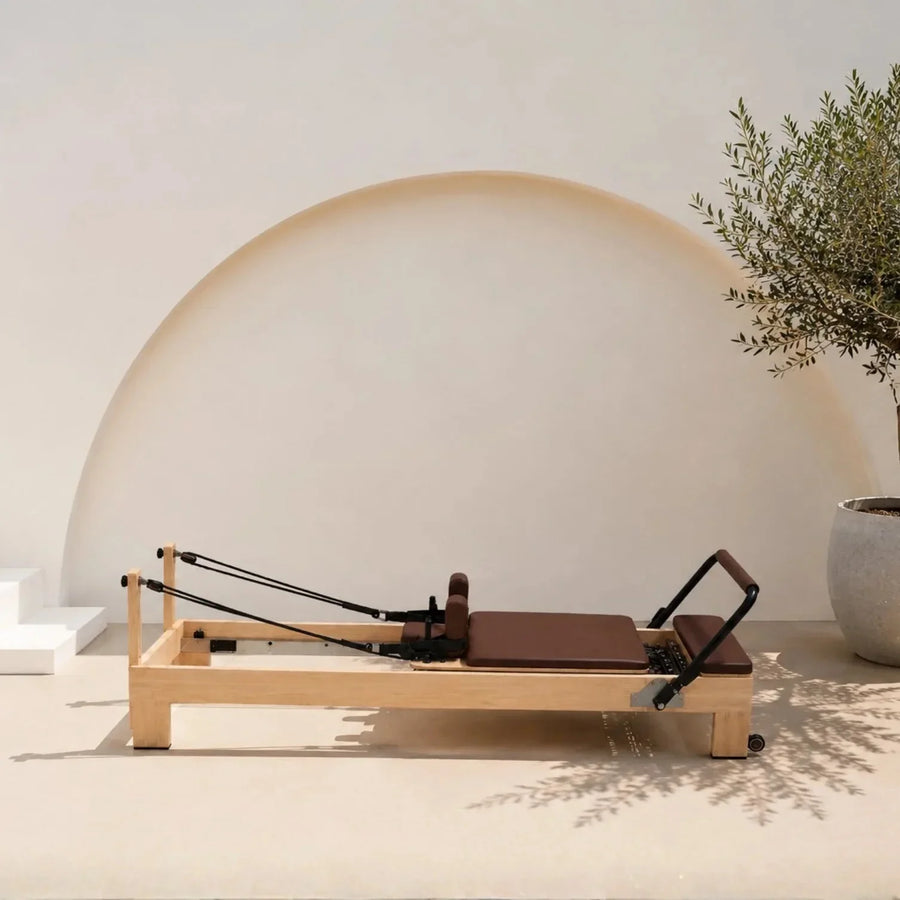
Our Reformers are designed for daily home use: solid oak wood structure, max load 150 kg, progressive spring system. Payment in 4 installments with no fees, free delivery, 3-year warranty.
View our complete Reformer range
The best Reformer exercises for lower back relief
The following exercises are specifically adapted for people suffering from non-specific lower back pain. They were selected for their ability to strengthen without compressing the spine.
Priority exercises (without contraindications)
| Exercise | Springs | Benefit for the back | Point of attention |
|---|---|---|---|
| Footwork (heels, arches) | 3 springs | Reactivates deep muscles in an unloaded position (lying down) | Flat back, no excessive lower back arch |
| Hundred (preparation) | 2 springs | Transverse abdominis activation without forced spine flexion | Legs at 90° if pain in low position |
| Short spine | 2 springs | Vertebra-by-vertebra mobilization — active spine decompression | Slow movement, don't force range of motion |
| Mermaid side stretch | 1 light spring | Opening of lateral intervertebral spaces, release of quadratus lumborum | Don't collapse to the side |
| Pelvic curl (preparation) | 2 springs | Lumbo-pelvic mobility, gluteal strengthening which relieves lower back | Reduced range if pain with extension |
| Knee stretch (rounded) | 2 springs | Lower back bracing strengthening in closed kinetic chain | Spine in maintained flexion — don't arch |
Exercises to adapt or avoid in acute phase
In acute phase (intense pain for less than 72 hours), certain exercises should be avoided or modified:
- Swan / Back extension: lower back extension can compress posterior structures. Resume only when pain is below 3/10 on the VAS scale.
- Standing elephant: hip flexion combined with hamstring traction may worsen sciatica. Replace with lying Footwork.
- Stomach massage with rotation: spine rotation under load is contraindicated in acute phase. Resume without rotation initially.
- Tendon stretch: balancing at the edge of the carriage heavily engages lower back stabilizers. Reserve for consolidation phases.
Specific back program: 4 weeks to relieve lower back pain
This program is designed for people suffering from non-specific chronic lower back pain, validated by a doctor. It is not suitable for active disc hernias, severe stenosis, or recent post-operative pain.
| Week | Goal | Key exercises | Duration / Frequency |
|---|---|---|---|
| Week 1 | Reactivate without irritating | Footwork, Pelvic curl, Mermaid | 20 min / 3×week |
| Week 2 | Mobilize the spine | Short spine, Hundred (preparation), Knee stretch | 25 min / 3×week |
| Week 3 | Strengthen deeply | Full Hundred, Elephant, Side lying series | 30 min / 3×week |
| Week 4 | Consolidate and prevent | Full beginner program + gentle Swan | 35 min / 3×week |
For detailed spring settings exercise by exercise, consult our guide on how to adjust your Reformer springs.
The foldable Reformer: the at-home back care solution
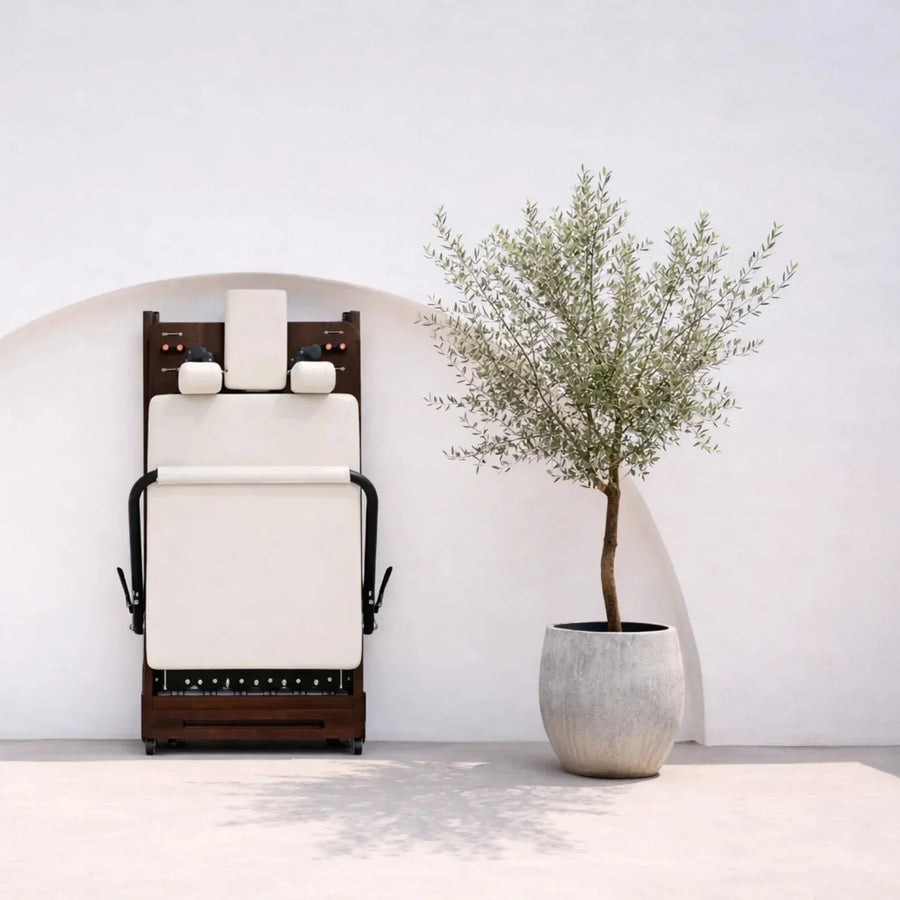
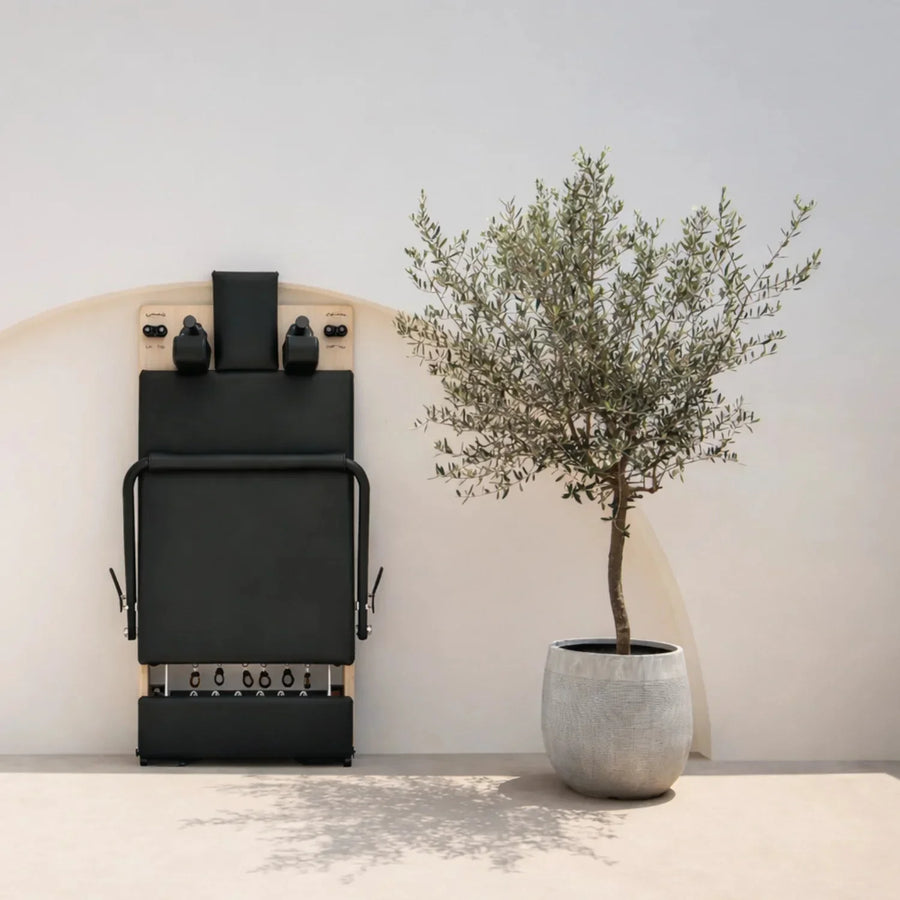
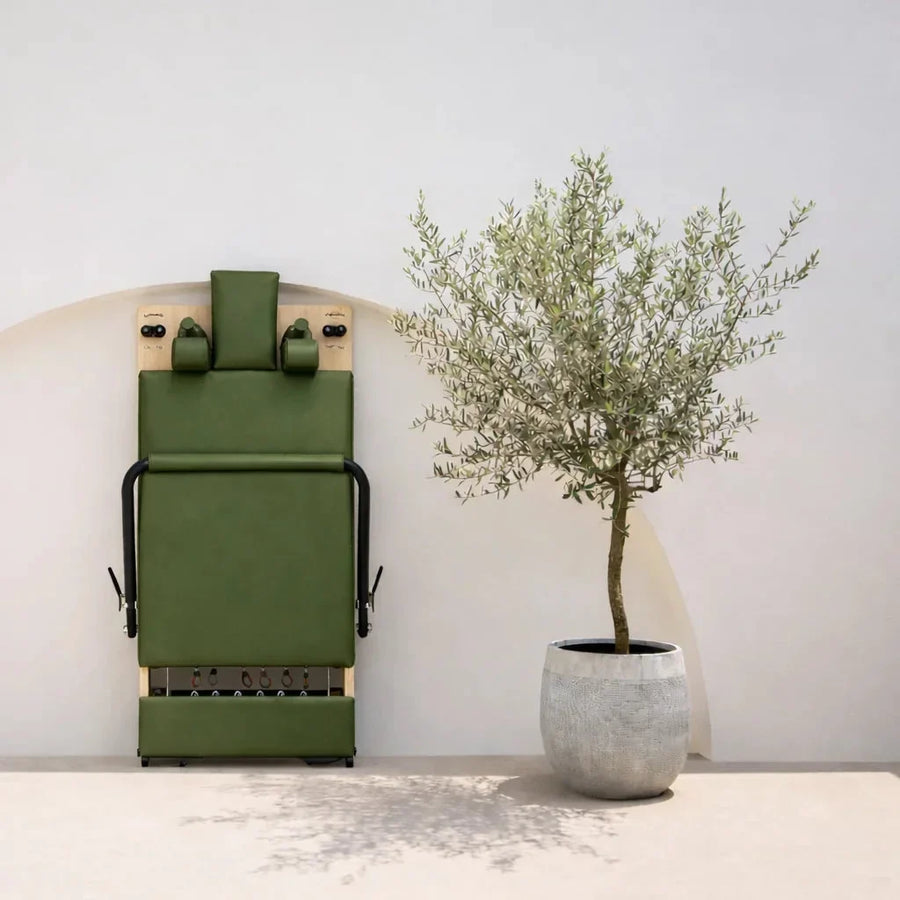
No need for a studio to care for your back. Our foldable Reformer sets up in 30 seconds in any room and stores discreetly after your session. 3-year warranty, free delivery, payment in 4 installments with no fees.
View our foldable Reformer
Pilates Reformer vs other back approaches: comparison
| Approach | Lower back effectiveness | Joint impact | Home accessibility | Progressivity |
|---|---|---|---|---|
| Reformer Pilates | Very high | None | Excellent | Very fine (springs) |
| Mat Pilates | High | None | Excellent | Limited |
| Yoga (Hatha) | Moderate | None | Excellent | Limited |
| Swimming | High | None | Poor | Moderate |
| Weight training | Low to moderate | Moderate to high | Average | Good |
The Reformer's decisive advantage over all other approaches: progressive spring resistance allows you to adapt intensity to your back's condition that day. On a day of moderate pain, you work with 1 spring. On a good day, you switch to 3. This flexibility is impossible with body weight alone.
FAQ — Pilates Reformer and lower back pain: frequently asked questions
Is Pilates Reformer inadvisable with disc hernias?
Not systematically, but a diagnosed disc hernia requires medical approval before any practice. Some physical therapists prescribe Reformer for post-discal rehabilitation with a specific protocol. In acute phase (radiating pain, neurological deficit), all sports practice must be suspended pending medical advice. In the consolidation phase, Reformer can accelerate recovery through unloaded spine work.
How long before feeling lower back relief with Reformer?
First effects (reduced morning stiffness, better ease with daily activities) typically appear between week 2 and 4 at 3 sessions per week. Significant pain reduction is measurable at 6-8 weeks. These timelines vary depending on how long you've had lower back pain, body type, and practice regularity.
Can you do Reformer during a sciatica flare-up?
During an acute sciatica flare (radiating leg pain, tingling, muscle weakness), sports practice is inadvisable without medical approval. Outside flare-ups, Reformer is often recommended to strengthen lower back stabilizers and reduce flare frequency. Exercises in supine position (lying on your back) are generally best tolerated.
Can Reformer replace physical therapy for the back?
Pilates Reformer is not a substitute for physical therapy for diagnosed lower back conditions. However, it's an excellent complement during consolidation phases and a very effective prevention tool to avoid recurrence. Some physical therapists train their patients on Reformer before directing them toward independent home practice.
Should you stop Reformer if pain increases during a session?
Yes, always. Increased pain during an exercise is an immediate stop signal for that exercise. General rule: pain should not exceed 3/10 during a session and should return to its initial level within an hour after. If pain persists or intensifies after a session, consult a healthcare professional before resuming.
Ready to care for your back at home? Discover our complete range of Pilates Reformers — 3-year warranty, free delivery, payment in 4 installments with no fees. Questions? Our team is available 7 days a week.
```
