

Mat Pilates (often called matwork) and Reformer Pilates are based on the same fundamentals: control, precision, breathing, posture. But in practice, the experience is very different: on the mat, resistance comes mainly from your body weight and gravity; on the Reformer, it comes from a machine with adjustable resistance (springs) and movement guided by a sliding carriage.
If you're torn between the two, this guide will help you choose based on your profile, goals, level, and context (home or studio). You'll also see how to intelligently combine both if you want to progress faster.
Difference #1: Resistance (body weight vs. springs)
Mat Pilates
On the mat, the main resistance is your body: you work a lot with gravity, floor support, and your ability to stabilize. It's simple, accessible, and very effective… but it sometimes requires more body awareness, especially at first, because there's no machine to "guide" the movement.
Reformer Pilates
On the Reformer, resistance is adjustable: you can increase or reduce intensity based on your level, the day's objective, or the exercise. Resistance can also assist: on some exercises, it "helps" the movement, allowing you to build good technique before moving to greater difficulty.
Conversely, resistance can make an exercise very demanding if it's not set properly: hence the benefit of progressing step by step.
Difference #2: Precision and movement sensation
Mat: "Internal" precision
Mat Pilates greatly develops perception: you learn to feel your pelvis, rib cage, points of contact, and breathing. This is excellent for progress… but some beginners compensate without realizing it (shoulders rising, pelvis moving, spine arching, etc.).
Reformer: "Guided" precision
The Reformer brings another form of precision: the machine encourages slow, fluid, controlled movement. Pilates At Home highlights machines designed for smooth, stable, and comfortable gliding, with components selected to minimize vibration and maintain a premium feel from session to session. (This notion of "glide" really changes the experience.)
Machine stability also makes it easier to activate deep muscles and work while respecting your body's natural alignment.
Difference #3: Accessibility (equipment, space, budget)
Mat Pilates: ultra accessible
- Minimal equipment (often just a mat, possibly a small accessory)
- Low space constraint
- Very easy to start, anywhere
Reformer Pilates: an "equipment" investment
- You need a machine (at home or via studio)
- You need appropriate space
- Delivery times and conditions (bulky machine) matter
Pilates At Home specifically notes:
- exact dimensions and recommended space are listed on product sheets, and you need space for circulation around the machine.
- delivery times depend on model/destination: typically 3 to 6 weeks (made-to-order), and up to 6 to 8 weeks for professional orders.
Difference #4: Progression (beginner → advanced)
Mat: progression through mastery
Mat Pilates can be devilishly difficult if done properly: progression comes from precision, breathing, stability, and control. Many people discover that on the mat, a simple movement becomes very intense when you eliminate compensations.
Reformer: progression through adjustments + variations
On Reformer, you also progress through mastery… but you have an additional powerful lever: resistance settings.
Pilates At Home notes that adjustments and carriage fluidity allow safe progression, whether you're discovering Pilates or already advanced.
Mat Pilates or Reformer: which is "best" based on your goals?
Goal: gentle strengthening + toning
The Reformer is often perceived as very effective because adjustable resistance makes strengthening progressive, guided, and controlled. Pilates At Home specifically describes gentle strengthening without harsh impact on joints, and controlled training where movement quality takes priority over intensity.
Goal: learn the basics and become independent
Mat Pilates is excellent for developing true body understanding: breathing, placement, control, body awareness. It builds solid foundations that make the Reformer even more effective afterward.
Goal: correct posture and imbalances
Both work. The Reformer often provides a more "guided" feeling, useful for working on alignment and deep muscle activation. The mat develops independence and refinement.
Goal: regular practice at home
If you're looking for a "studio at home" practice, the Reformer is an excellent choice, especially if you want to progress without spinning your wheels.
Pilates At Home clearly distinguishes:
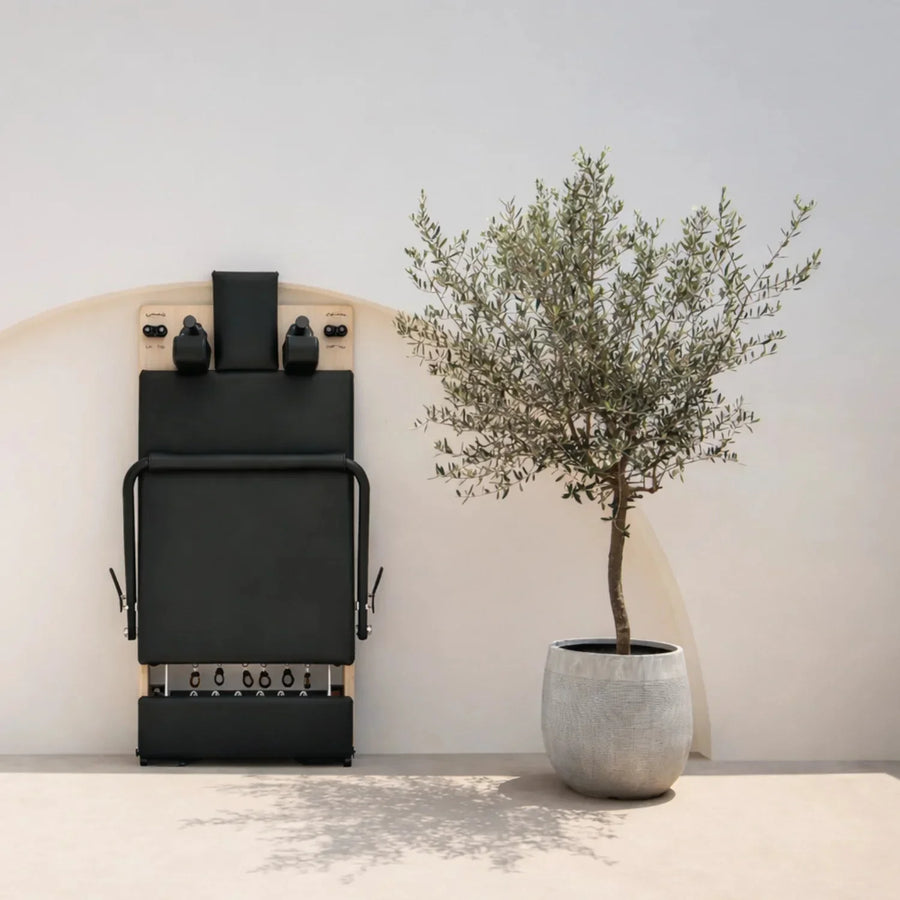
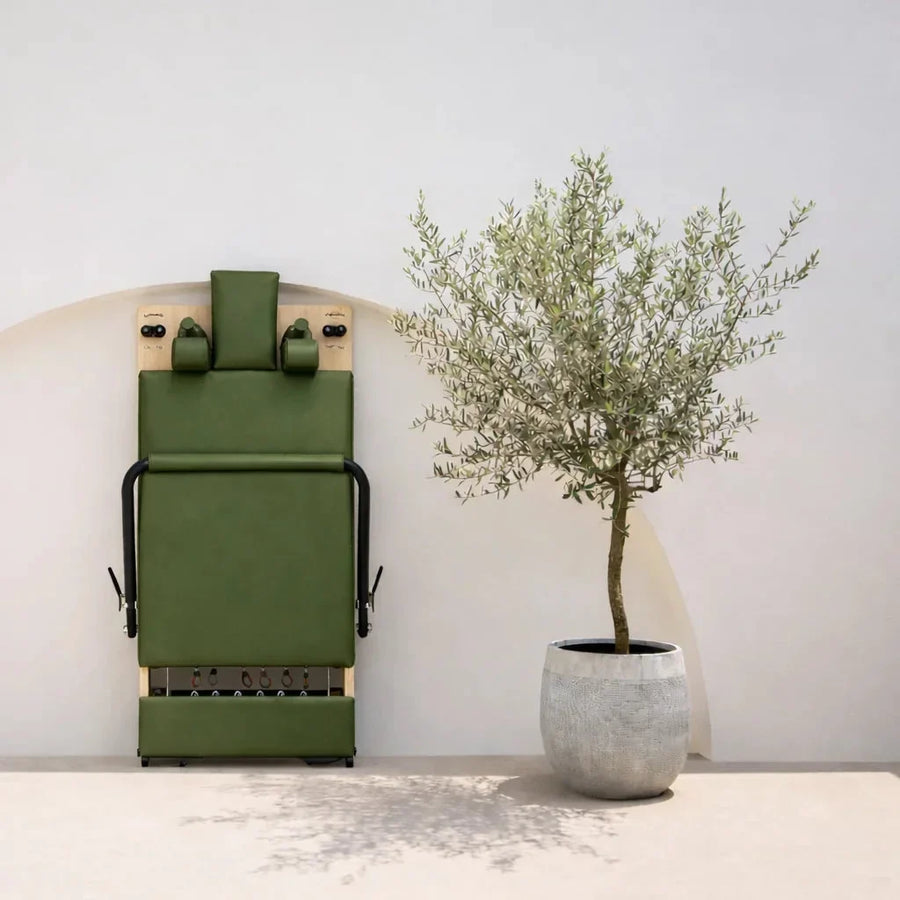
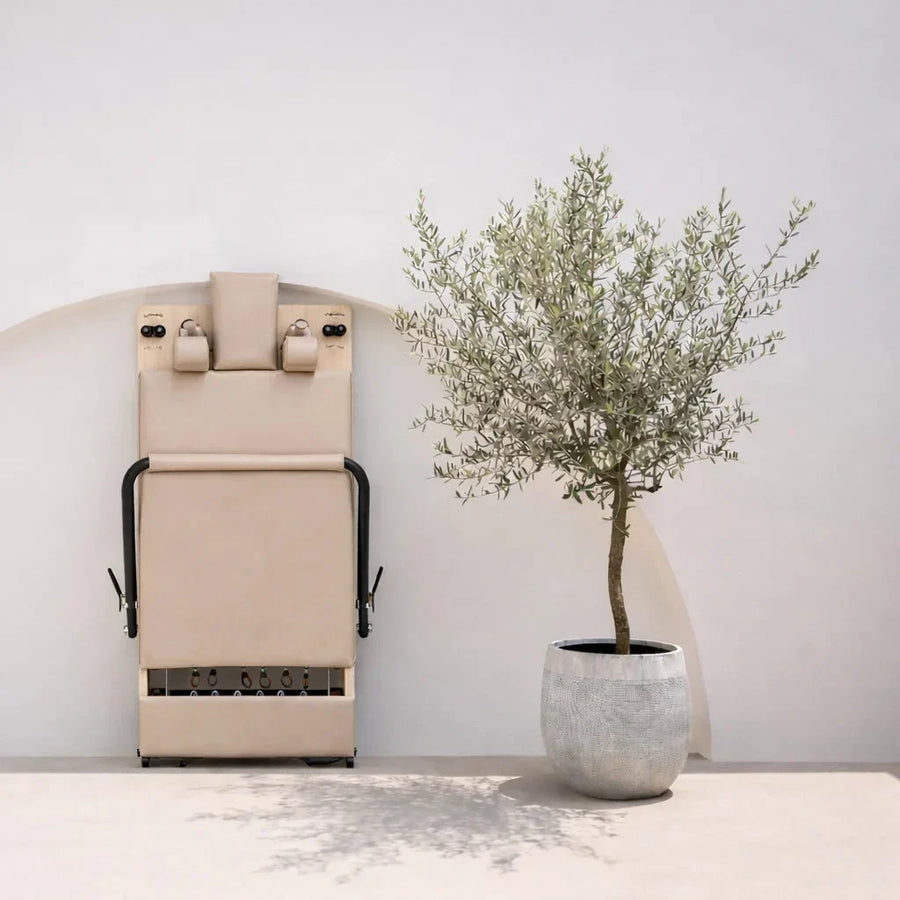
- Foldable Reformer: designed to be stored more easily, without compromise on stability for home use.
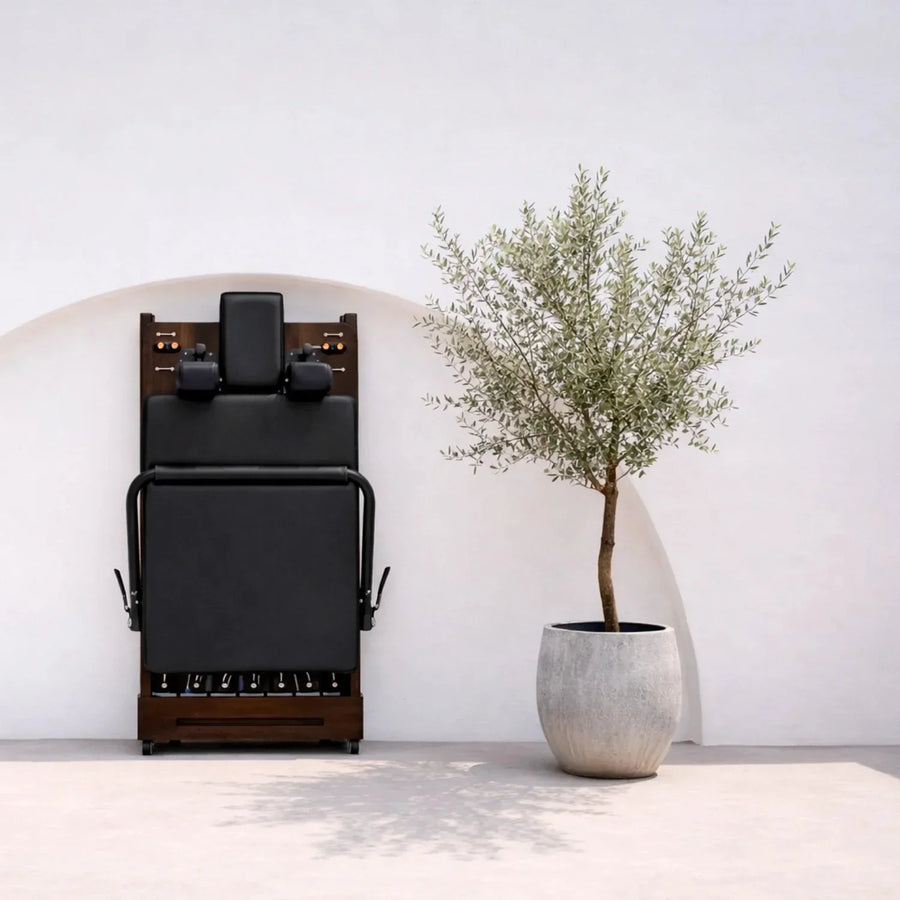
- Fixed Reformer: preferred for intensive use (daily practice, studios, high rotation).
How to choose: a simple method (in 60 seconds)
Choose Mat Pilates if:
- you want to start immediately, without equipment constraints
- you have limited space
- you want to build your control and independence
Choose Reformer Pilates if:
- you want adjustable resistance and very structured progression
- you like the idea of guided, fluid, precise movement
- you want a "studio" experience at home or to equip a professional space
And if you want to progress fast: do both. The mat builds foundations, the Reformer amplifies progression.
Foldable or fixed Reformer: which is best for your situation?
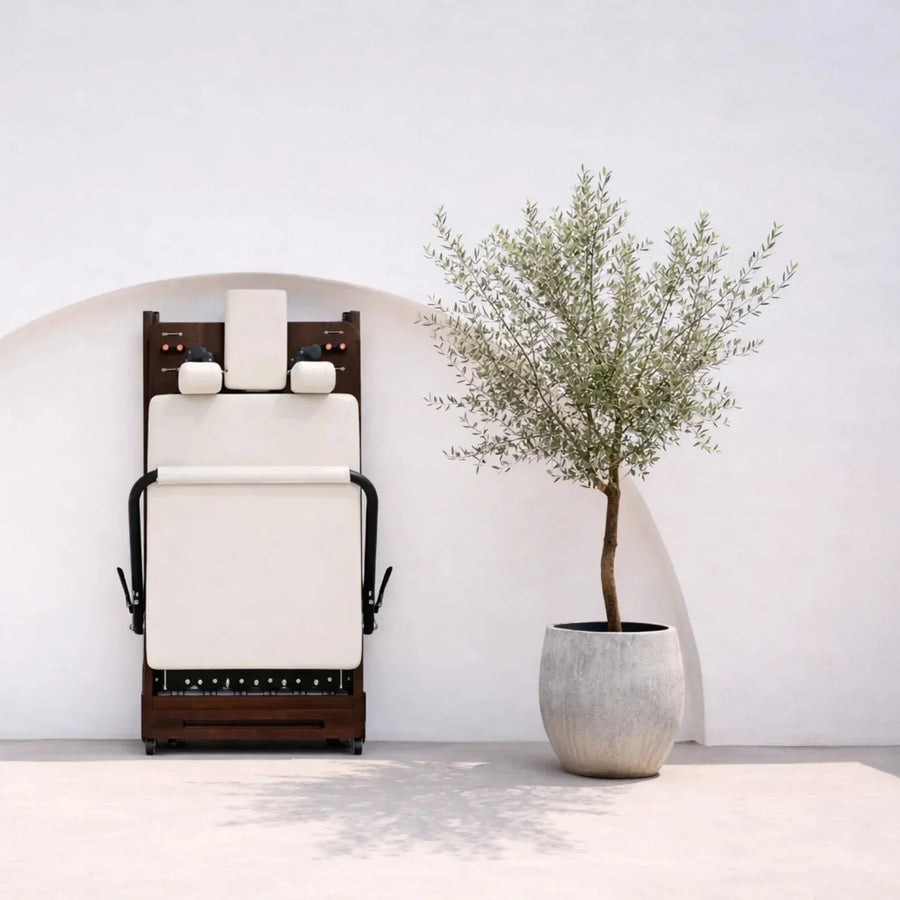
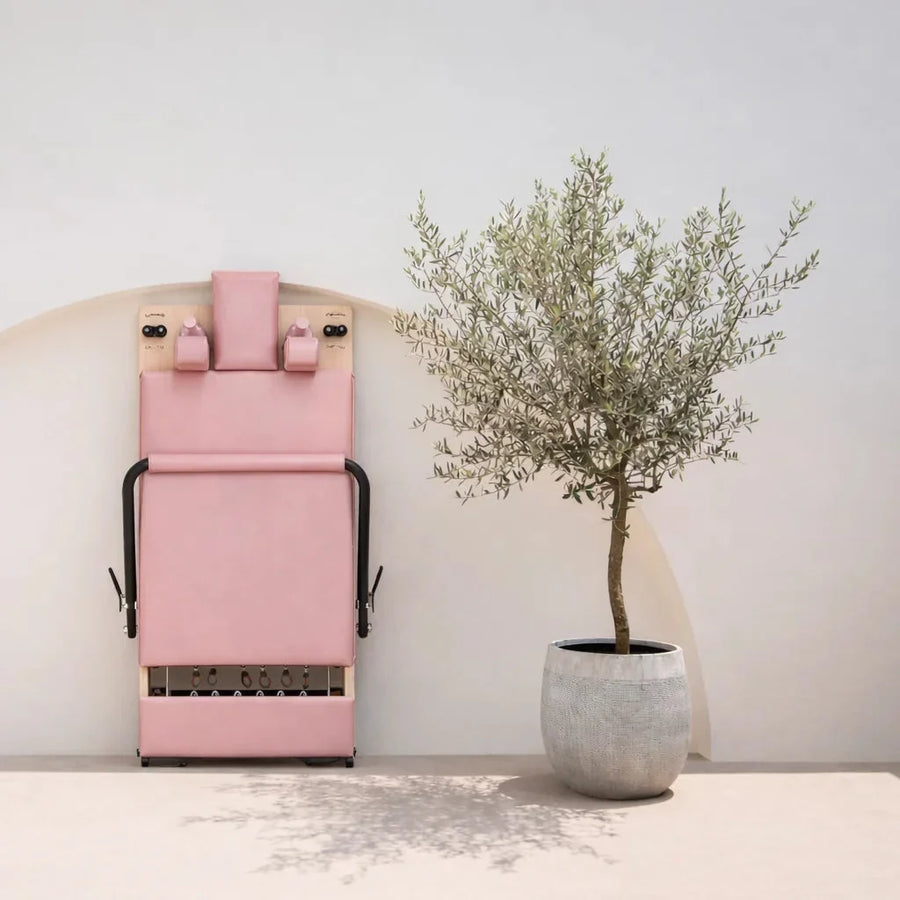
Foldable Reformer: home, storage, daily use
The foldable Reformer is designed to be stored more easily, without compromise on stability for home use.
Fixed Reformer: intensive, studio, high rotation
The fixed Reformer is preferred for intensive use (daily practice, studios, high user rotation).
The "real" reasons why the Reformer is often more expensive
This question comes up a lot in searches and SERPs (People Also Ask). The simplest answer: the Reformer involves:
- a machine (design, materials, parts, quality control)
- logistics (bulky product, specialized transport)
- sometimes professional options (finishes, branding, configuration)
Moreover, Pilates At Home also offers customizations (finishes, upholstery, aesthetic options, marking), reserved for professional orders with a minimum of 2 machines and prior technical validation.
FAQ: Reformer Pilates vs. Mat Pilates
Is Mat Pilates as effective as the Reformer?
Yes, if technique is good. The mat can be very intense and very effective. The Reformer offers adjustable resistance and guided experience that can accelerate progression and vary sessions more.
Is the Reformer "easier" than Mat Pilates?
It depends. The Reformer can assist certain movements (so help you learn), but it can also be very challenging if resistance is high. The mat can seem "simple" on the surface, but very demanding when done correctly.
I'm a beginner: what do I start with?
If you want to start right away: Mat Pilates. If you want guided, structured progression: Reformer (with intelligent progression). Both work for beginners if basics are respected.
What if I want to practice at home?
If space is limited or you want to store easily: a foldable Reformer is usually the most practical choice.
Conclusion: the right choice is the one you'll do regularly
Mat Pilates is unbeatable for starting simply, developing body awareness, and building a solid foundation. The Reformer brings adjustable resistance, guided movement sensation, and very structured progression, ideal for home and studios. If you're unsure: choose based on your context (space, budget, frequency) or combine both to progress faster.
```
