

In brief: The spring adjustment on a Pilates Reformer determines the resistance of each exercise. A beginner typically starts with 2 to 3 springs. The golden rule: if you cannot maintain a neutral spine throughout the exercise, remove one spring. Each exercise has its optimal resistance, independent of your overall level.
Spring adjustment is the question every practitioner asks during their first Reformer session. Too much resistance, and you compensate with the wrong muscles. Too little, and the exercise loses effectiveness. Yet most guides remain vague on this topic.
In this article, you'll find adjustment rules for each major exercise family, a complete reference table, and the most common mistakes to avoid based on your level.
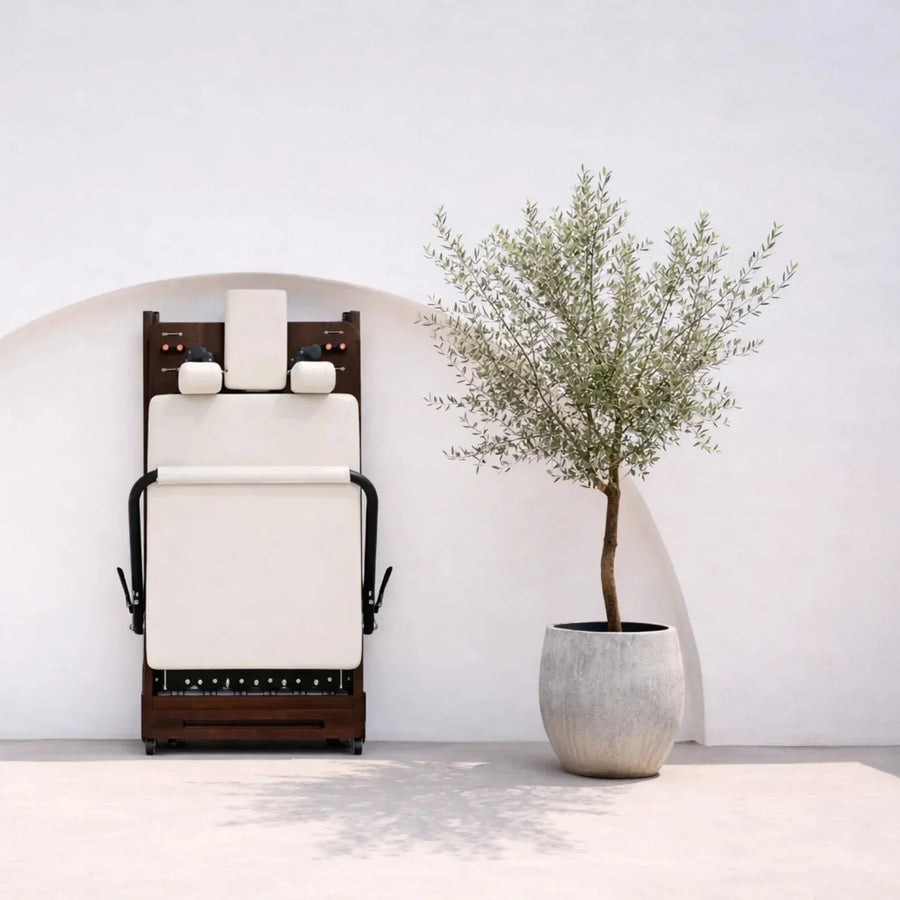
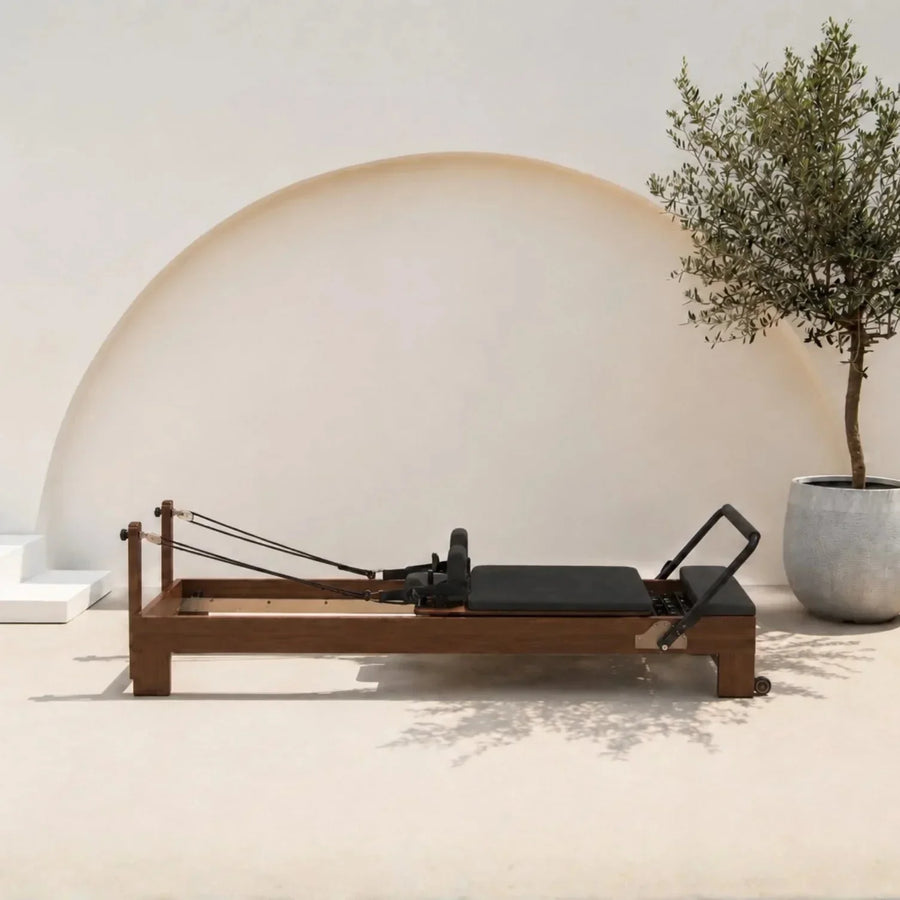
How does a Reformer's spring system work?
A Pilates Reformer is equipped with 4 to 5 springs in different colors, each corresponding to a specific resistance level. The color convention varies slightly by manufacturer, but the most common standard is as follows:
| Color | Resistance | Typical use |
|---|---|---|
| Red | Heavy (1 spring = main load) | Footwork, leg exercises |
| Blue | Medium | Core, combined exercises |
| Green | Light | Arms, mobility exercises |
| Yellow | Very light | Stretches, assisted exercises |
Total resistance is the sum of engaged springs. 2 red springs = maximum resistance. 1 yellow spring = minimum resistance. On Pilates At Home Reformers, the side clip system allows you to connect or disconnect each spring in just a few seconds without interrupting your session flow.
Reference table: which springs for each exercise?
This table covers the most common exercises, organized by family. The values shown correspond to an intermediate practitioner (60–75 kg). Adjust down one spring if you're a beginner, up one spring if you're advanced.
| Family | Exercise | Recommended springs | Beginner |
|---|---|---|---|
| Footwork | Parallel footwork (heels) | 3 springs (2R + 1B) | 3 springs |
| V-position footwork | 3 springs (2R + 1B) | 3 springs | |
| Arches / balls of feet footwork | 2-3 springs | 2-3 springs | |
| Core | Hundred | 2 springs (1R + 1B) | 2 springs |
| Stomach massage | 3 springs | 3 springs | |
| Short box series | 2 springs | 2 springs | |
| Back / Traction | Pulling straps | 1 spring (R) | 1 spring |
| Down stretch | 2 springs (1R + 1B) | 2 springs | |
| Elephant | 2 springs | 2 springs | |
| Arms / Shoulders | Arm circles (straps) | 1 light spring (G or Y) | 1 green spring |
| Rowing series | 1 spring (B) | 1 blue spring | |
| Backstroke | 1 spring (B) | 1 blue spring | |
| Mobility / Stretching | Mermaid side stretch | 1 light spring | 1 green spring |
| Short spine | 2 springs (1R + 1B) | 2 springs |
A Reformer with a simple and intuitive spring system
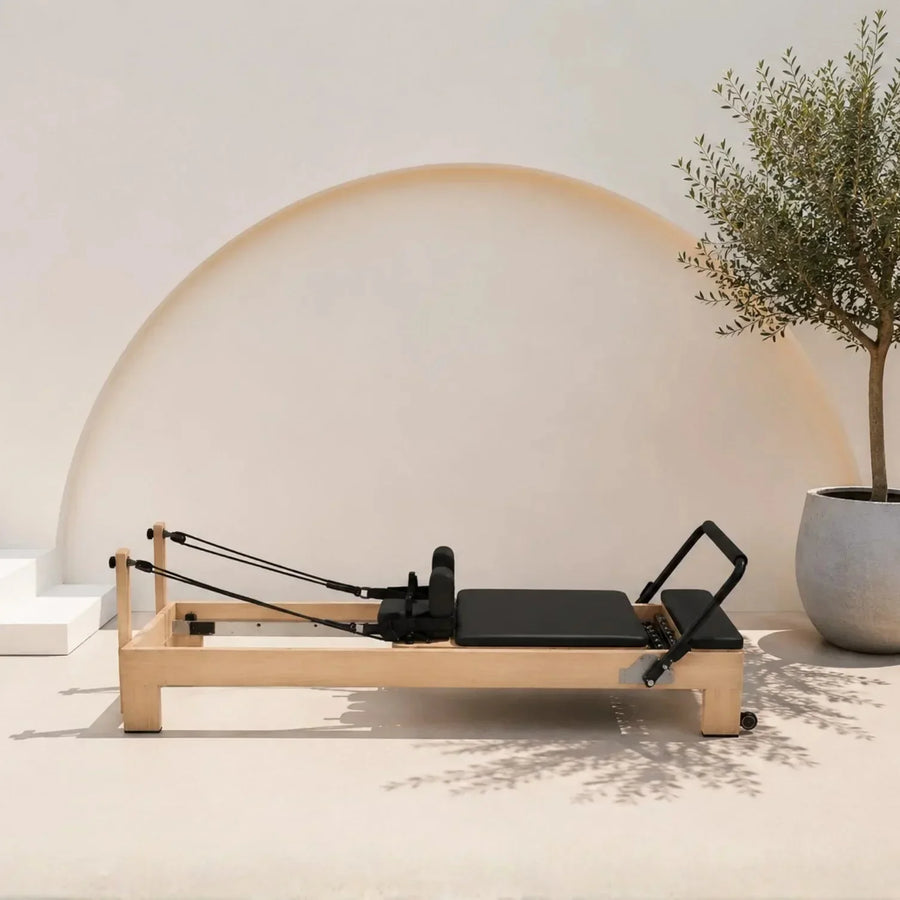
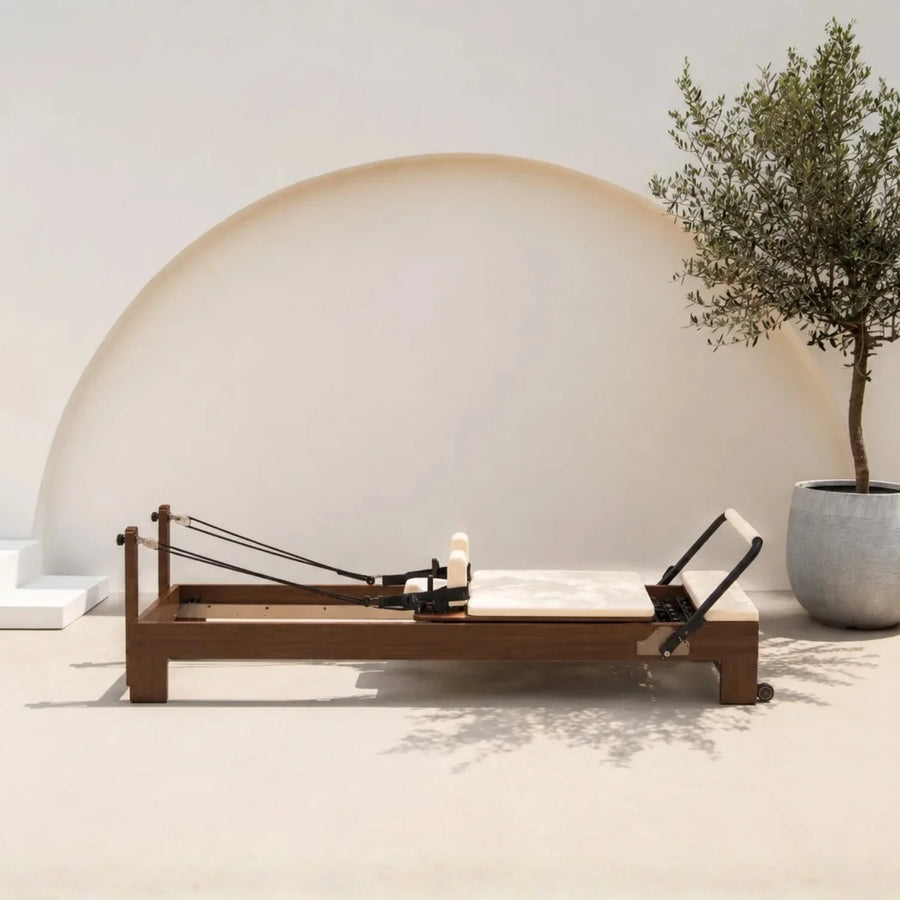
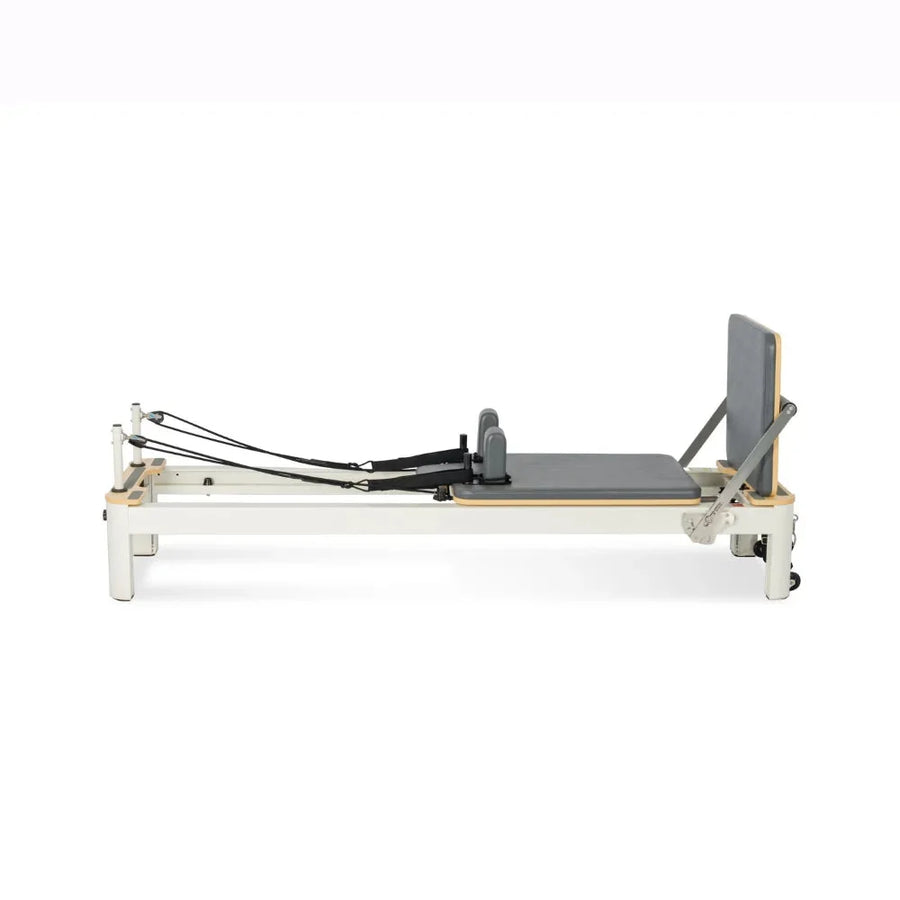
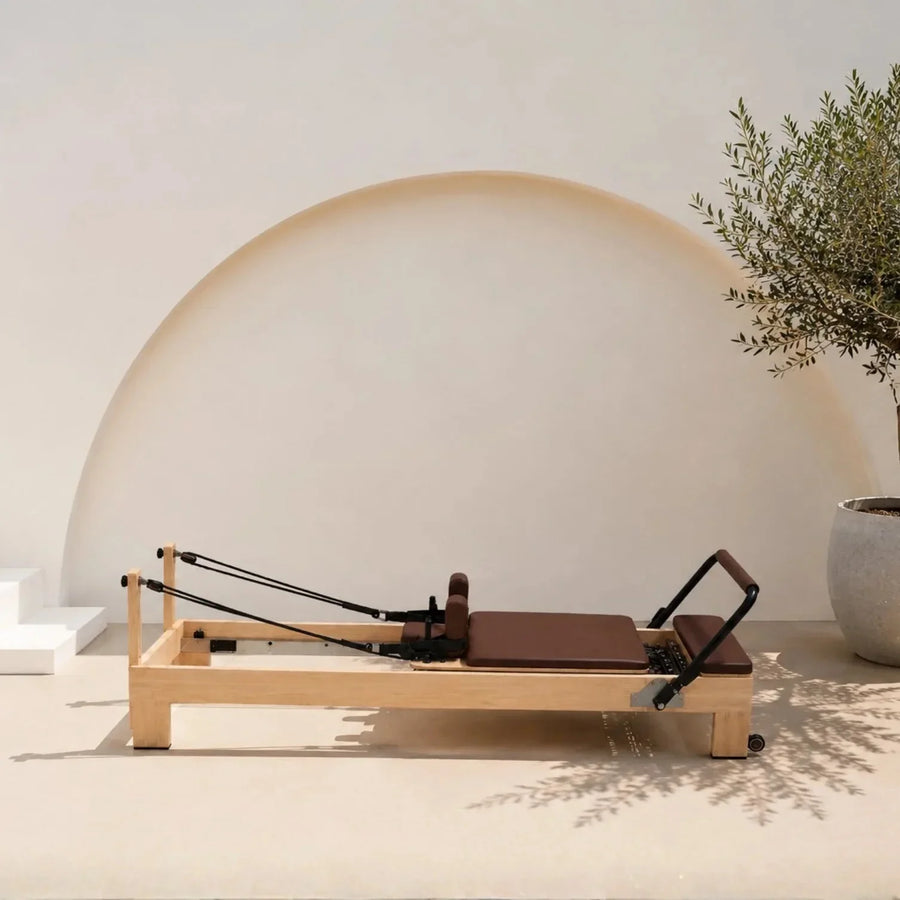
Our Reformers are equipped with a color-coded clip system that lets you change resistance in just a few seconds between exercises. Solid oak wood, maximum load 150 kg, 3-year warranty, free shipping.
View our complete Reformer range
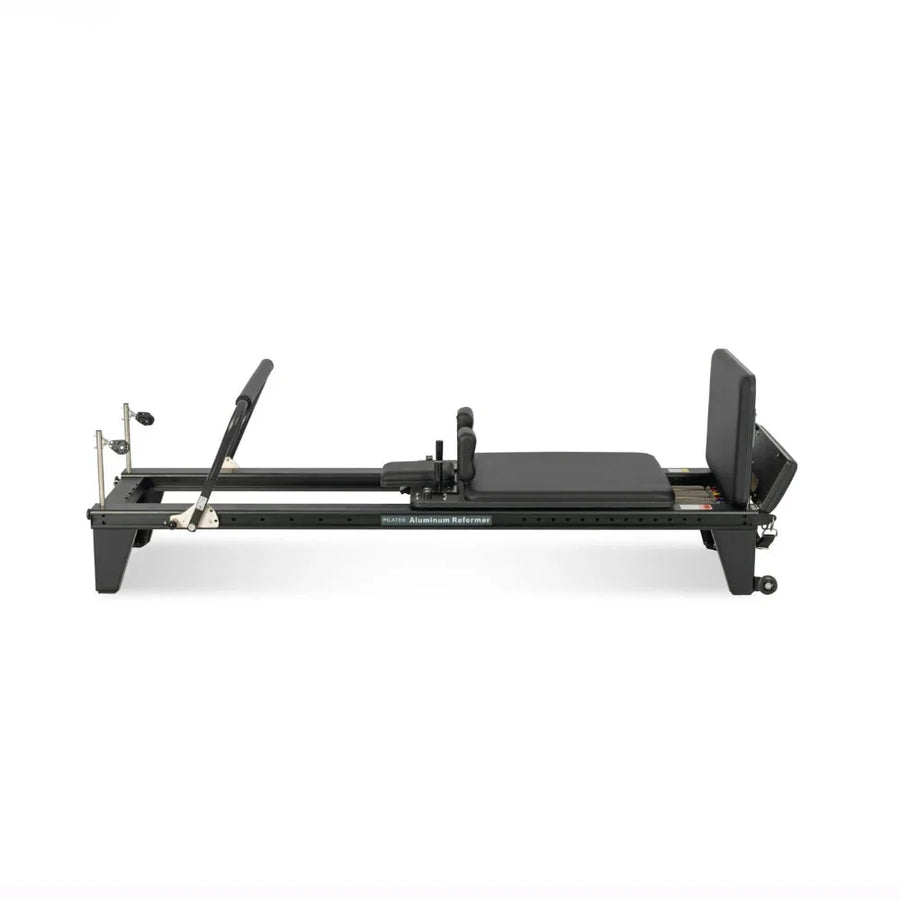
Adapting settings based on your level and goals
Optimal resistance depends not only on the exercise — it also varies based on your level, body size, and session objective. Here's how to read the situation:
Adjusting by level
| Level | Adjustment principle | Signal to adjust |
|---|---|---|
| Beginner | Follow the reference table strictly. Don't increase until you've mastered the technique. | If neutral spine is lost: remove 1 spring |
| Intermediate | Vary resistance based on your session goal (strength vs mobility). | If 15+ reps without effort: add 1 spring |
| Advanced | Use resistance strategically to target specific adaptations (strength, endurance, proprioception). | Deliberately vary from session to session |
Adjusting by session goal
The same exercise can be performed at different resistances for different effects:
- Muscle building goal: high resistance, 6 to 10 controlled reps. Example: Footwork at 4 springs to build quadriceps and glutes.
- Muscle endurance goal: moderate resistance, 15 to 20 reps. Example: Hundred at 2 springs for 100 continuous arm pumps.
- Mobility / recovery goal: light resistance, maximum range of motion. Example: Mermaid at 1 green spring for thoracic opening.
- Proprioception / control goal: very light or no resistance (1 yellow spring), slow and precise movements.
The 5 most common spring adjustment mistakes
1. Keeping the same setting throughout the session
This is the most common beginner mistake — setting 3 springs at the start and never touching them again. However, arm exercises require much less resistance than leg exercises. Changing springs between exercise families is an integral part of practice — in a studio, a certified coach does this systematically.
2. Confusing high resistance with progression
Increasing resistance isn't necessarily a sign of progress. On certain exercises like Elephant or Mermaid, lighter resistance is actually harder because it requires more muscular control and active stabilization. Progression in Reformer Pilates comes first from technique, not load.
3. Not adjusting for body size
A 50 kg person and a 90 kg person won't work effectively with the same resistance on leg exercises. Body weight directly affects carriage movement difficulty. As a general rule, add 1 spring for every additional 15 to 20 kg on Footwork exercises.
4. Underestimating the yellow spring
The yellow spring (light spring) is often overlooked because it seems too easy. Yet it's the most appropriate for arm exercises, assisted stretches, and proprioception work. A spring that's too strong on these exercises creates shoulder and neck compensations.
5. Not checking spring wear
A worn or poorly secured spring won't deliver expected resistance and may come loose during exercise. Regularly check the condition of hooks and tension on each spring. If a spring feels less resistant than others of the same color, it's time to replace it.
Need a reliable Reformer with a robust spring system?
Our studio Reformers are designed for intensive use: high-resistance steel springs, professional-grade clips, 3-year parts and labor warranty. Free shipping, 4-payment financing available.
View our Studio Reformers
Spring adjustment for special exercises
Certain exercises or accessories require specific settings that don't fit standard categories:
| Exercise / Accessory | Recommended setting | Reason |
|---|---|---|
| Jump Board (jumps) | 2-3 springs depending on body size | Cushioning carriage return — too light = impact shock, too heavy = loss of range |
| Long Box (prone) | 1-2 springs | Prone position: resistance works only arms and back |
| Tendon stretch | 2 springs | Balance requires enough resistance to control carriage |
| Rehabilitation / post-operative | Minimum 1 light spring | Always consult a healthcare professional before practicing |
If you're just starting out and looking to structure your first sessions, check out our 30-day beginner Reformer program with exercise-by-exercise settings.
FAQ — Reformer Pilates spring adjustment: frequently asked questions
How many springs should I use when starting on a Reformer?
For leg exercises (Footwork), start with 3 springs. For core exercises (Hundred, Short box), use 2 springs. For arm exercises (Arm circles, Rowing), 1 light spring is enough. These values apply to an average body size of 60 to 75 kg — add one spring if you're over 80 kg on leg exercises.
What's the difference between a red spring and a blue spring?
The red spring is the most resistant: it represents approximately 50 to 60% of the machine's total resistance when engaged alone. The blue spring offers intermediate resistance, about 30 to 40% of total load. The green spring is light (15-20%) and the yellow is very light (10%). These percentages vary by manufacturer, but the hierarchy red > blue > green > yellow is universal.
Do I need more resistance to lose weight with the Reformer?
Not necessarily. Higher resistance increases muscle recruitment and thus calorie expenditure on leg exercises. But on core and arm exercises, excessive resistance degrades form and reduces effectiveness. To maximize calorie burn, it's better to reduce rest periods between exercises rather than systematically increase resistance.
Can I use the Reformer without any springs?
Technically yes, but not recommended for standard practice. Without springs, the carriage is free and won't return to its starting position: some passive mobility exercises can be done without springs, but most Pilates exercises require at least 1 spring to control carriage return movement. Practicing without springs on dynamic exercises increases the risk of loss of control.
How do I know if my springs are worn?
Three signs indicate a spring needs replacement: noticeably lower tension than other springs of the same color, a cracking or grinding sound during movement, or deformed hooks that no longer engage properly. With regular practice (3 sessions/week), spring lifespan is 3 to 5 years. Pilates At Home's 3-year warranty covers manufacturing defects on springs and hooks.
Ready to practice at home? Discover our complete range of Pilates Reformers — 3-year warranty, free shipping, 4-payment financing. Questions? Our team is available 7 days a week.

