

In Brief
To get started with Reformer Pilates, master these 10 fundamental exercises: Footwork, The Hundred, Leg Circles, Frog, Elephant, Knee Stretch, Long Stretch, Short Box, Stomach Massage, and Arms Series. These movements work your entire body, strengthen your core, and improve posture. Practice 2-3 times per week with 2-3 light springs to begin.
You've just acquired your Reformer Pilates machine or you're starting at a studio and wondering which exercises to begin with? The 10 movements presented in this guide form the essential foundation that every beginner should master. Designed to be accessible while effectively engaging your entire body, these exercises will allow you to develop strength, flexibility and control safely. Follow our detailed instructions with spring settings, positioning and common mistakes to avoid so you can progress quickly and build solid foundations in your Reformer Pilates practice.
Before You Start: Settings and Basic Principles
Success with your Reformer Pilates exercises relies on understanding the settings and fundamental principles. Unlike mat Pilates where only your body weight creates resistance, the Reformer uses a spring system that requires precise adjustments to guarantee safety and effectiveness.
Your Reformer's springs are color-coded and correspond to different resistance levels. Most machines use this code: red (heavy resistance), blue (medium resistance), yellow (light resistance), green (very light resistance). To start, use 2 to 3 light to medium springs (yellow + blue, or 2 blues). This configuration provides enough support without overwhelming you.
The footbar position also affects exercise difficulty. Most Reformers offer 4 to 7 height positions. For leg exercises, start with the bar in a middle position, neither too high nor too low. You can adjust later based on your flexibility and leg length. If you own a Reformer at home, consult our complete guide on spring settings.
The fundamental principles of Pilates apply with even more precision on the Reformer. Breathing synchronized with movement remains essential: inhale to prepare the movement, exhale during effort. Centering means maintaining your powerhouse (deep abdominal muscles) engaged throughout the exercise. Control means you master the carriage going and coming back, with no jerking or sudden movements. Precision demands careful execution of each repetition rather than a large number of approximated repetitions.
| Element | Beginner Setting | What to Watch For |
|---|---|---|
| Springs | 2-3 light to medium springs (yellow + blue) | Too much resistance tires you quickly |
| Footbar | Middle position (3 or 4 out of 7) | Adjust according to leg length |
| Headrest | Raised to support the neck | Lower if experiencing neck tension |
| Straps | Equal length on both sides | Check before each session |
The 10 Essential Beginner Exercises
These ten exercises form the basic repertoire that every beginner should master before progressing to more advanced movements. Each exercise targets specific muscle groups while engaging your core (powerhouse) to improve stability and control.
1. Footwork - Working the Feet (Parallel Positions)
Objective: Warm up the legs, connect breathing to movement, strengthen thighs and glutes.
Settings: 3 medium springs (2 red + 1 blue, or 3 blues). Footbar in middle position. Headrest raised.
Starting Position: Lying on your back, head on headrest, feet on footbar hip-width apart in parallel position (toes pointing toward ceiling), knees bent. Spine in neutral position with a slight natural curve at the lower back.
Movement: Inhale in starting position. Exhale by pushing the footbar to straighten your legs without locking the knees. Inhale as you slowly return, controlling the carriage. Perform 10 repetitions while keeping your hips stable and lower back anchored.
Common Mistakes to Avoid: Don't let your lower back arch excessively. Don't lock your knees when legs are straight. Keep shoulders relaxed, away from ears.
2. The Hundred - The Hundred
Objective: Strengthen deep core muscles, improve breathing endurance, stabilize the trunk.
Settings: 2 light springs (1 yellow + 1 blue, or 2 yellows). Straps on feet.
Starting Position: Lying on your back, straps on feet, legs extended at 45 degrees (or knees bent if completely beginner). Head and shoulders lifted from carriage, arms extended alongside body a few inches from carriage.
Movement: Pump your arms up and down with an amplitude of 6-8 inches. Inhale for 5 pumps, exhale for 5 pumps. Repeat this cycle 10 times to reach 100 pumps (hence the name). Maintain engaged abdominals and lower back flat on carriage throughout.
Common Mistakes to Avoid: Don't let shoulders rise toward ears. Don't arch your lower back. If legs are shaking, bend knees more or raise them higher.
3. Leg Circles - Circles with Legs
Objective: Mobilize the hips, strengthen oblique abdominals, improve pelvic control.
Settings: 1 light spring (1 blue or 1 yellow). Straps on feet.
Starting Position: Lying on your back, straps on feet, legs extended toward ceiling perpendicular to the floor. Arms alongside body, palms down for stability.
Movement: Draw small circles with your legs (approximately 12-inch diameter). Inhale during half the circle, exhale during the other half. Perform 5 circles in one direction, then 5 circles in the other direction. Maintain perfectly stable hips without lateral rocking.
Common Mistakes to Avoid: Don't make circles too large that destabilize your pelvis. Keep legs straight without locking knees. Don't let your lower back lift off the carriage.
4. Frog - The Frog
Objective: Strengthen inner thighs, mobilize hips, engage powerhouse.
Settings: 2 light springs (2 yellows or 1 yellow + 1 blue). Straps on feet.
Starting Position: Lying on your back, straps on feet, heels together and knees open to the sides (frog position). Arms alongside body.
Movement: Inhale in starting position. Exhale by straightening legs diagonally at 45 degrees while keeping heels together. Inhale as you return knees to frog position. Perform 8 to 10 fluid repetitions.
Common Mistakes to Avoid: Don't separate heels during extension. Maintain stable lower back without excessive arching. Control the return, don't let springs snap legs back quickly.
5. Elephant - The Elephant
Objective: Strengthen abdominals, stretch hamstrings, improve core control.
Settings: 3 medium to heavy springs (2 red + 1 blue). Footbar in low position.
Starting Position: Standing on carriage, hands on footbar shoulder-width apart, back rounded (spinal flexion), legs straight or slightly bent. Heels at edge of carriage.
Movement: Inhale in starting position. Exhale by pushing carriage back with legs while maintaining rounded back and straight arms. Inhale as you return carriage. Perform 8 repetitions keeping the rounded form constant throughout.
Common Mistakes to Avoid: Don't let back hollow or flatten out. Don't bend arms. Keep head relaxed between arms, neck lengthened.
Progress at Your Own Pace
Mastering these first 5 exercises typically takes 3 to 4 weeks of regular practice (2-3 sessions per week). Don't rush toward more advanced movements. Quality of execution always takes priority over quantity or difficulty.
Read our complete beginner guide6. Knee Stretch - Knee Stretch (Rounded Position)
Objective: Strengthen core, work coordination, improve center engagement.
Settings: 2 medium springs (2 blues). Footbar in low or middle position.
Starting Position: Kneeling on carriage, hands on footbar, back rounded, gaze toward navel. Toes at back edge of carriage.
Movement: Inhale in starting position. Exhale by pushing carriage back while keeping back rounded and abdominals engaged. Inhale as you return carriage without moving upper body. Perform 8 to 10 controlled repetitions.
Common Mistakes to Avoid: Don't let your back straighten or undulate. Keep shoulders stable, don't let them rise toward ears. Movement comes from legs, upper body stays still.
7. Long Stretch - Long Stretch
Objective: Strengthen entire body in plank position, develop shoulder stability, work total body control.
Settings: 2 medium springs (2 blues or 1 red + 1 blue). Footbar in low position.
Starting Position: In plank position, hands on footbar shoulder-width apart, feet on carriage (toes at edge), body aligned from head to heels.
Movement: Inhale by pushing carriage back while keeping body perfectly straight. Exhale as you return carriage while maintaining alignment. Perform 5 to 8 repetitions with strong abdominal and glute engagement.
Common Mistakes to Avoid: Don't let hips sag or pike up. Keep shoulders over wrists, don't let them move forward. Engage abdominals to protect lower back.
8. Short Box - Short Box (Rounded Position)
Objective: Strengthen abdominals in flexion, improve spinal mobility, work articulated control.
Settings: Footbar lowered or removed. Box placed on carriage against shoulder blocks. Straps on feet for stability.
Starting Position: Sitting on box, feet in straps, knees bent, arms crossed over chest. Back straight.
Movement: Inhale in starting position. Exhale by rounding spine vertebra by vertebra backward about halfway down. Inhale holding position. Exhale as you return vertebra by vertebra to upright. Perform 6 to 8 repetitions.
Common Mistakes to Avoid: Don't collapse backward. Control movement in both directions. Keep shoulders relaxed, neck lengthened.
9. Stomach Massage - Stomach Massage (Rounded Position)
Objective: Strengthen abdominals, stretch spine, improve sitting posture.
Settings: 3 medium to heavy springs (2 red + 1 blue). Footbar in low position.
Starting Position: Sitting at front edge of carriage, feet on footbar hip-width apart, back rounded, hands on front edge of carriage beside hips.
Movement: Inhale by straightening legs to push carriage back. Exhale as you return carriage with knees toward chest while maintaining rounded back. Perform 8 to 10 fluid repetitions.
Common Mistakes to Avoid: Don't let your back straighten. Keep weight on sitting bones (ischial tuberosities), not on sacrum. Maintain low, relaxed shoulders.
10. Arms Series - Arms Series (Rowing)
Objective: Strengthen upper back, improve shoulder posture, work trunk stability.
Settings: 1 light spring (1 blue or 1 yellow). Straps in hands, sitting facing springs.
Starting Position: Sitting in middle of carriage, legs extended in front (or slightly bent if tight hamstrings), back straight, straps in hands, arms extended in front at shoulder height.
Movement: Inhale in starting position. Exhale by pulling straps back, bending elbows and bringing shoulder blades together. Inhale as you slowly return to starting position. Perform 8 to 10 repetitions.
Common Mistakes to Avoid: Don't lean back. Keep shoulders low, don't let them rise. Maintain straight back without slouching.
Beginner Program: How to Structure Your Sessions
Now that you know the 10 essential exercises, how you organize your sessions will determine the quality of your progress. A well-structured program alternates muscle groups, respects recovery time, and progresses gradually in difficulty.
For the first 4 weeks, practice twice per week with at least one rest day between sessions. Your body needs time to absorb new movements and develop muscle memory. Each session should last between 30 and 45 minutes, including warm-up and cool-down.
A typical beginner session follows this structure: 5 minutes warm-up with Footwork (exercise 1) to prepare your body, 25-30 minutes of work with 6 to 8 exercises from the list, varying each session, and 5 minutes cool-down with light stretching. Don't try to do all 10 exercises each session—that's counterproductive and exhausting.
Here are two sample sessions to alternate. Session A: Footwork (10 reps), The Hundred (100 pumps), Leg Circles (5+5), Frog (10 reps), Knee Stretch (10 reps), Short Box (8 reps), stretches. Session B: Footwork (10 reps), Elephant (8 reps), Long Stretch (6 reps), Stomach Massage (10 reps), Arms Series (10 reps), The Hundred (100 pumps), stretches.
Progress is measured first and foremost by quality of execution. After 4 weeks, you should master synchronized breathing, maintain your engaged core without thinking about it, and control the carriage in both directions of movement. That's when it's time to increase difficulty slightly: move to 3 sessions per week, add 1 spring to certain exercises, or increase repetitions from 8 to 12.
| Week | Frequency | Session Duration | Focus |
|---|---|---|---|
| 1-2 | 2 sessions | 30 minutes | Learning movements, breathing |
| 3-4 | 2 sessions | 40 minutes | Coordination, carriage control |
| 5-8 | 2-3 sessions | 45 minutes | Fluidity, gradual progression |
| 9-12 | 3 sessions | 50 minutes | Variations, intermediate exercises |
Common beginner mistakes include wanting to progress too quickly by adding springs or advanced exercises before mastering basics, skipping warm-up and jumping straight to main exercises, practicing irregularly (4 sessions one week, then nothing for 10 days), and comparing your progress to others rather than focusing on your own evolution. For a complete 30-day program, consult our structured beginner Reformer program.
Concrete Benefits After 8 Weeks of Practice
Regular practice of these 10 fundamental exercises, 2 to 3 times per week, produces measurable results in 8 weeks. These changes affect both your physical condition and your daily posture and overall well-being.
On the muscular level, you'll notice significant strengthening of your deep core. Your transverse and oblique muscles, engaged in every exercise, develop tone that improves your natural posture. Your thighs and glutes gain firmness thanks to leg exercises, while your back gradually strengthens, reducing tension from prolonged sitting.
Posture improves noticeably. You naturally stand straighter without conscious effort. Shoulders that tended to round forward reposition themselves. Your pelvis finds neutral alignment, reducing excessive arching or loss of lumbar curve. This postural improvement translates to reduced chronic back pain for 78% of regular practitioners according to recent studies.
Flexibility also progresses, particularly in the hamstrings, hips and spine. Exercises like Elephant and Short Box gently mobilize these areas, increasing range of motion without forcing. You gain fluidity in daily movements: bending, standing, reaching for objects become easier.
Mentally, the concentration required for precise exercise execution develops better body awareness. You identify tension areas in your body more easily and know how to release them. Stress decreases thanks to controlled breathing practiced during exercises. Many practitioners report better quality sleep after a few weeks of regular Reformer practice.
| Benefit | Visible After | Daily Impact |
|---|---|---|
| Core Strengthening | 3-4 weeks | Better posture, flatter stomach |
| Posture Improvement | 4-6 weeks | Straighter back, less tension |
| Flexibility Gain | 5-7 weeks | More fluid movements, increased range |
| Back Pain Reduction | 6-8 weeks | Less tension, improved comfort |
| Leg/Glute Tone | 6-8 weeks | Refined silhouette, defined muscles |
FAQ - Beginner Reformer Pilates Exercises: Frequently Asked Questions
How long does it take to master these 10 exercises?
With regular practice of 2 to 3 sessions per week, allow 8 to 12 weeks to properly master these 10 fundamental exercises. Mastery means executing each movement with correct form, synchronized breathing and control of the carriage in both directions. Some exercises like Footwork or The Hundred become comfortable after 3-4 weeks, while others like Long Stretch or Short Box require 6-8 weeks to develop necessary strength and coordination. What matters is quality of execution, not speed of progression.
How many springs should I use for each beginner exercise?
For leg exercises (Footwork, Frog), start with 2 to 3 medium springs (2 blues or 1 red + 1 blue). For abdominal exercises (The Hundred, Leg Circles), use 1 to 2 light springs (1 to 2 yellows or light blues). For plank exercises (Elephant, Long Stretch), prefer 2 to 3 medium springs to ensure stability and control. Don't hesitate to adjust based on how you feel: if you can't control the carriage return, decrease resistance. If conversely the carriage barely moves, add a spring.
Can I practice these exercises if I have back pain?
Reformer Pilates is often recommended to relieve back pain thanks to its support and controlled resistance. However, in case of acute pain, consult a healthcare professional before starting. If you have chronic tension or moderate pain, these exercises can help with some adaptations: keep the headrest raised to support your neck, avoid positions that increase pain, start with fewer springs and fewer repetitions, and focus on maintaining neutral spine without excessive arching. Exercises like Elephant and Stomach Massage gently stretch the back and are particularly beneficial.
What's the difference between these beginner exercises and intermediate exercises?
Beginner exercises focus on learning fundamental movements, coordinating breath with movement and basic strengthening. They typically use stable positions (lying down, sitting, kneeling) with moderate ranges of motion. Intermediate exercises add complexity: less stable positions (standing, balancing), larger ranges of motion, movement combinations, fluid transitions between exercises, and use of accessories (jump board, box in different positions). Progress to intermediate level only when you've perfectly mastered these 10 basic exercises, typically after 12 to 16 weeks of regular practice.
Do I absolutely need to follow the presented exercise order?
The order presented follows a pedagogical logic (from simplest to more complex exercises) but isn't mandatory for your sessions. What matters is respecting a few principles: always start with a warm-up (Footwork is ideal), alternate muscle groups to avoid fatigue (don't do all abdominal exercises back-to-back), vary positions (lying down, sitting, kneeling, standing) to balance your session, and finish with less intense exercises or stretching. You can create your own sequences by combining 6 to 8 of these exercises based on your goals and daily energy level.
Are these exercises enough for a complete Reformer practice?
These 10 exercises form an excellent foundation for your first 3 to 6 months of practice. They work your entire body, develop technical fundamentals and create a solid routine. However, once you've mastered these movements, you'll want to progress to a broader repertoire including intermediate and advanced exercises, variations of these basic exercises, use of accessories (jump board, box in different positions, magic circle), and longer, more fluid sequences. The Reformer offers over 200 possible exercises—these 10 movements are just the beginning of a rich and evolving journey. Check out our exercise library to go further.
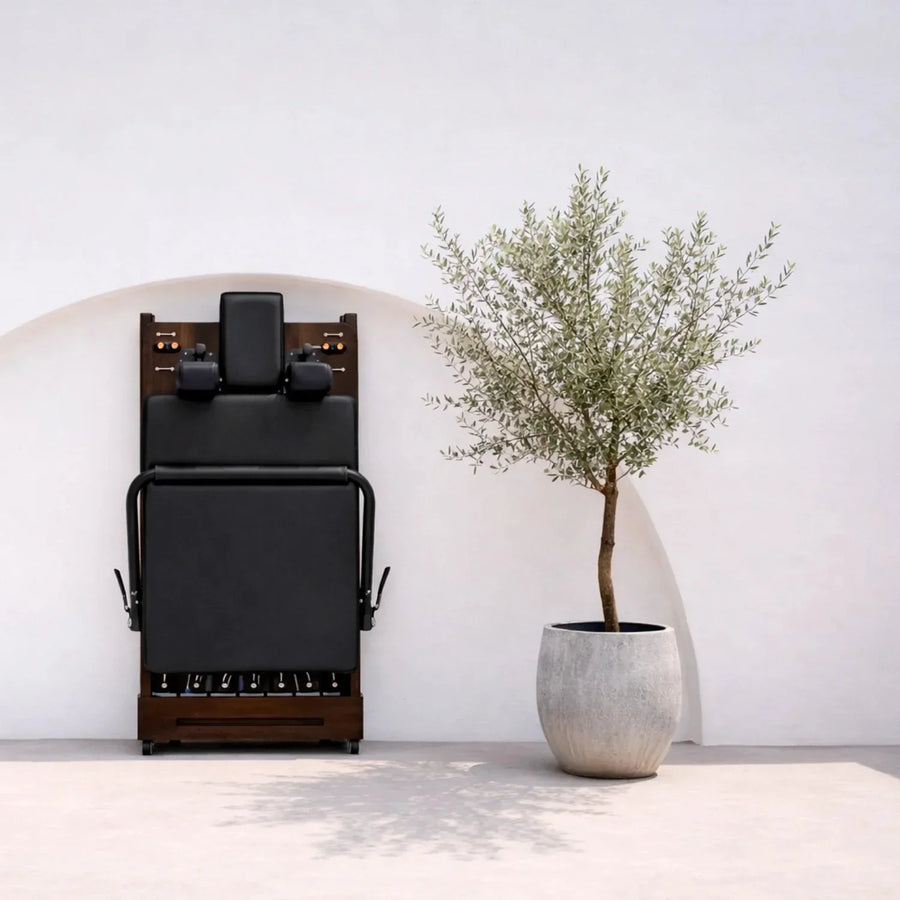
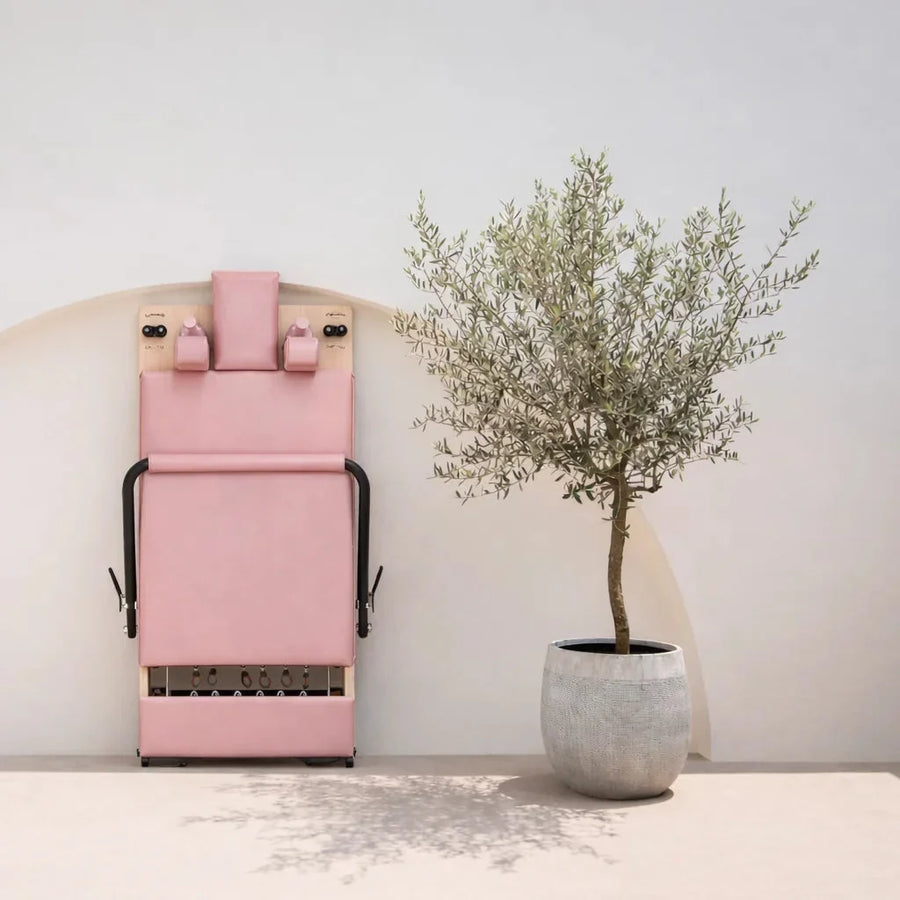
Start your Reformer practice with confidence. Discover our Foldable Reformer range perfectly suited for beginners, with 3-year guarantee, free shipping and 4-installment payment with no interest. Our team is available 7 days a week to guide you.

